

You see them every day: the box around a tube of toothpaste, the carton protecting a bottle of serum, the sleeve on a candle. Folding cartons dominate cosmetics, food, pharmaceuticals, and electronics because they combine product protection, printability, and recyclability in a format that scales easily. The Paperboard Packaging Council, representing over 80% of the North American folding carton industry, notes that consumers actively prefer packaging that is renewable, recyclable, and responsible - and paperboard fits all three.
Below, we walk through the most common folding carton styles, compare them side by side, and share practical advice on choosing the right one for your product.

10 Common Types of Folding Cartons
1. Straight Tuck End (STE) and Reverse Tuck End (RTE)
These are the two most widely used folding carton styles, and they are closely related. Both use tuck flaps - rather than glue - to close the top and bottom. On an STE, both flaps tuck from the same side. On an RTE, the top and bottom tuck from opposite sides, distributing stress more evenly and creating a smoother opening experience.
Both styles are cheap to produce, easy to assemble by hand or machine, and use minimal material. The trade-off is limited tamper evidence and poor support for heavy products - the unglued bottom can pop open under load. For lightweight items like cosmetics, health supplements, and beauty product packaging, STE and RTE cartons are the default choice. If you need a deeper look at reverse tuck end box options, we offer a range of customizable configurations.
Which one should you pick? If cost-per-unit is the sole priority and the product is light, STE is the leaner option. If the consumer experience matters - think pulling a box off a shelf and flipping the lid - RTE generally feels smoother. In terms of material cost, the two are nearly identical.
2. Snap-Lock Bottom (1-2-3 Bottom) and Auto-Lock Bottom
When a product is too heavy for a standard tuck-end bottom, lock-bottom cartons step in. Both use a tuck-flap top but reinforce the bottom with an interlocking or pre-glued mechanism.
A snap-lock bottom (also called a 1-2-3 bottom) has bottom flaps that fold into each other in sequence and snap into position without glue. It is more affordable but requires a brief learning curve during assembly. An auto-lock bottom goes further: the bottom is pre-glued during manufacturing and springs into a locked position the moment you press the carton open. It is faster on automated lines but costs more per unit.
Snap-lock cartons work well for mid-weight items like candles and electronics accessories. Auto-lock cartons are the go-to for glass bottles, wine packaging, and heavy gift sets where a bottom blowout during shipping would be costly.
3. Seal End (Full Seal End)
Seal end cartons have both top and bottom flaps glued shut during the packaging process. There is no flap for the consumer to push in - the carton must be torn open, often along a perforation. This makes them the strongest option for tamper evidence.
The downside: seal end cartons cannot be reclosed and require a gluing station on the filling line. They are the standard for pharmaceuticals, medical devices, and food products that must remain sealed until first use - anywhere regulatory compliance demands a visible, intact seal. Our healthcare folding box solutions are built around this carton style.

4. Two-Piece (Lid and Base)
A two-piece folding carton has a separate base tray and a lift-off lid. This structure creates a "reveal moment" during unboxing that premium brands love. It achieves a rigid-box feel at a fraction of the cost. To understand the differences more clearly, see our comparison of rigid boxes versus folding boxes.
Two-piece cartons work best for jewelry, perfume, and premium tech accessories - products where the unboxing experience directly shapes brand perception. The trade-off is higher material usage and slower assembly than single-piece designs.
5. Gable Top
The peaked-roof containers from the dairy aisle. The body is laminated for moisture resistance, often with a built-in spout. They require specialized filling equipment and are limited to liquids: milk, juice, cream, and broth.
6. Four-Corner and Six-Corner Glued Cartons
These cartons use glued tabs to form a rigid, tray-like structure. They ship flat and pop open with minimal effort. Four-corner versions suit cupcakes, desserts, and small retail items. Six-corner versions add extra panels for heavier products like bakery goods or luxury retail packaging.
7. Display Carton (Window Box and Hang Tab)
Display cartons are designed to sell the product before the consumer touches it. A window carton has a die-cut opening covered with clear film so shoppers can see the product inside. A hang-tab carton includes a cut-out that clips onto a retail peg, maximizing vertical shelf space.
In cosmetics and supplement packaging, display cartons are everywhere - from nutritional supplement boxes with ingredient windows to hang-tab beauty products. The film adds a manufacturing step and slightly complicates recycling, but the boost in point-of-sale visibility often justifies the trade-off.
8. Tray-Style Folding Carton
A tray-style folding carton has a flat base with raised walls and no integrated lid. It is commonly used for food service, beverage multipacks, and retail display trays. Trays pair well with shrink-wrap overwrap or a separate sleeve for branding.
9. Tubular Folding Carton
A tubular folding carton forms a tube shape with closure panels at each end. It is the structural family that includes STE, RTE, and seal end cartons. The term is useful when specifying with a converter, as it distinguishes tube-shaped cartons from tray-style or specialty shapes.
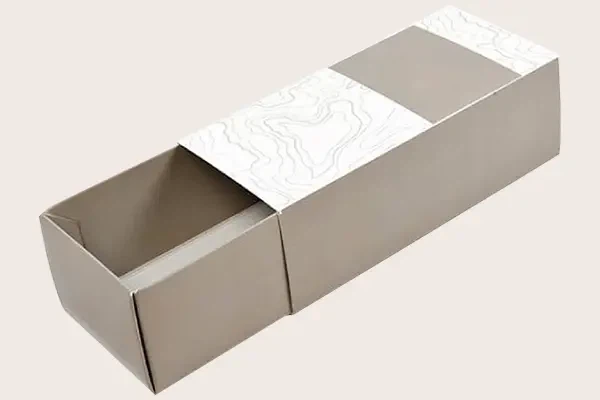
10. Sleeve and Tray
A sleeve-and-tray carton pairs an inner tray with an outer sliding printed sleeve for branding. The result is a clean, minimalist unboxing that sits between standard cartons and rigid boxes in perceived quality. It suits subscription boxes, premium tea, chocolate, and tech gadgets. The two-component design costs more and is slower to assemble but delivers strong shelf presence.
Quick Comparison Chart
| Carton Type | Assembly | Weight Capacity | Relative Cost | Tamper Evidence |
|---|---|---|---|---|
| STE / RTE | Very easy | Light | Low | Minimal |
| Snap-Lock Bottom | Moderate | Medium–heavy | Low–medium | Minimal |
| Auto-Lock Bottom | Very easy (pre-glued) | Heavy | Medium | Minimal |
| Seal End | Requires glue line | Medium–heavy | Medium | Strong |
| Two-Piece | Moderate | Light–medium | Medium–high | Moderate |
| Gable Top | Specialized | Liquids only | High | Strong |
| 4/6-Corner Glued | Easy (pop-open) | Medium–heavy | Medium | Minimal |
| Display (Window/Hang Tab) | Easy–moderate | Light–medium | Medium | Low–moderate |
| Tray-Style | Easy | Medium | Low–medium | None |
| Sleeve and Tray | Moderate | Light–medium | Medium–high | Moderate |
Ratings are relative within the folding carton category. Actual performance varies by paperboard grade, carton dimensions, and supplier capabilities.

How to Choose the Right Folding Carton
Choosing a carton is not just about aesthetics. Start with these four questions:
What does the product weigh?
Products under roughly 500 grams typically do fine in STE or RTE cartons. Heavier items - like a glass bottle or a boxed appliance - need a lock-bottom design. If you have experienced bottom blowout in transit, that is a clear signal to upgrade from tuck-end to snap-lock or auto-lock.
How fast is your packaging line?
High-volume automated lines favor auto-lock bottom and tuck-end cartons because they erect in seconds. Hand-packing operations can still work with snap-lock and two-piece cartons despite slightly slower setup.
Where will the product be sold?
Retail shelves reward visibility: display cartons with windows and hang tabs pull their weight in brick-and-mortar. Products sold primarily through e-commerce need structural protection more than shelf appeal, making seal-end or lock-bottom cartons the smarter pick.
What is the budget?
STE and RTE cartons have the lowest tooling and per-unit costs - a safe starting point for startups. Glued or pre-assembled designs cost more per unit but often reduce total cost at scale by speeding up the line. For a deeper breakdown, our guide on factors that affect box printing cost and quality covers the variables in detail. Always request physical samples from your supplier before committing - what looks right on a dieline can feel very different loaded with the actual product.
Materials and Printing Options
Common Paperboard Types
Solid Bleached Sulfate (SBS) offers a bright white surface with excellent print quality and is the standard for food, pharmaceutical, and beauty packaging. Coated Recycled Board (CRB) is more affordable, with a gray interior, and suits non-food or secondary packaging. Kraft paperboard delivers a natural brown look and strong fiber structure, appealing to sustainability-focused brands.
Printing and Finishing
Offset lithography dominates for long runs. Digital printing suits short runs and variable-data jobs. Beyond ink, finishing techniques elevate shelf presence: spot UV adds glossy accents, foil stamping creates metallic highlights, embossing produces tactile texture, and soft-touch lamination gives a velvety feel. Our overview of print methods for custom boxes covers each technique in detail.
Frequently Asked Questions
What is the most common type of folding carton?
The reverse tuck end (RTE) carton is the most widely used style. Its low cost, simple assembly, and compatibility with both manual and automated filling make it the default for lightweight consumer products across cosmetics, food, and electronics.
What is the difference between a folding carton and a rigid box?
A folding carton ships flat and is assembled before filling. A rigid box (set-up box) arrives fully formed and cannot be collapsed. Rigid boxes feel more premium but cost significantly more to produce, store, and ship. Our detailed guide on what a rigid box is and when to use one covers the trade-offs. For most mass-market and mid-range products, folding cartons strike the best balance of protection, presentation, and cost.
Are folding cartons recyclable?
Most folding cartons made from uncoated or water-based-coated paperboard are recyclable through standard curbside programs. Cartons with plastic film windows may require the film to be removed first, though newer compostable window films eliminate this step. Always check local recycling infrastructure in your target market.
How do I request a custom folding carton design?
Define your product dimensions, weight, and any special requirements (tamper evidence, food-contact compliance). Then contact a folding carton converter with your target quantity, preferred carton style, material, and artwork. Most suppliers produce an unprinted structural prototype for approval before committing to print production. You can submit an inquiry here to start the process with our team.
Final Thoughts
Every folding carton type solves a different packaging problem. Tuck-end cartons keep costs low for lightweight goods. Lock-bottom designs protect heavier or fragile products. Seal-end cartons deliver the tamper evidence that regulated industries demand. Display and two-piece formats make a brand statement at shelf level.
Rather than defaulting to the cheapest option, test two or three styles with your actual product inside. Ask your converter for samples early. If your product line spans multiple weights and channels, you may need different carton types across your range - and that is perfectly normal. Match the right carton to the right product, and the packaging becomes a competitive advantage rather than just a cost line.


