

This guide breaks down the real cost structure of custom box printing, gives you honest reference price ranges, and walks through ten practical moves that reduce cost without making your packaging look like it cut corners. If you are working with a limited budget, or simply trying to bring per-unit costs down as you scale, start here.

What Actually Drives Custom Box Costs Up?
Before trying to reduce packaging costs, it helps to understand what is actually being paid for. Five variables account for most of the price difference between a $0.30 box and a $1.50 box of the same basic type.
| Cost Driver | How It Affects Price | Impact Level |
|---|---|---|
| Material grade | Heavier board, specialty paper, or rigid construction raises base cost | High |
| Order quantity | Fixed setup costs spread across more units; larger runs cost less per box | High |
| Printing method | Offset requires plate fees; digital avoids setup but costs more at volume | High |
| Surface finishes | Foil stamping, embossing, spot UV each add a separate production step | Medium–High |
| Box structure complexity | Unusual die-cuts, magnetic closures, and custom inserts need custom tooling | Medium |
Two costs that brands often miss: tooling and die-cut setup fees, which are charged once per new box structure and typically run between $100 and $350 depending on complexity; and dimensional weight (DIM weight) charges from shipping carriers, which are calculated based on package volume rather than actual weight. A box that is slightly oversized can push each shipment into a higher billing tier - a cost that compounds quickly across hundreds of monthly orders. Carriers including FedEx and UPS publish their DIM weight formulas publicly, and it is worth running the numbers on your current box dimensions before your next reorder.
For a deeper look at how these variables interact, see our overview of factors that affect box printing cost and quality.
How Much Do Cheap Custom Boxes Actually Cost?
Most guides on this topic avoid giving specific numbers. The ranges below are based on typical factory-direct pricing for standard single or two-color print runs. They are reference points, not quotes - final pricing depends on your specific dimensions, finish requirements, and supplier.
| Material Type | Typical Price per Unit (1,000 pcs) | Best For |
|---|---|---|
| Kraft / Paperboard | $0.25 – $0.60 | Food, cosmetics, handmade goods |
| Corrugated (E or B flute) | $0.40 – $0.90 | eCommerce shipping, fragile items |
| Folding Carton | $0.35 – $0.80 | Retail display, lightweight products |
| Custom Mailer Box | $0.80 – $1.80 | Subscription boxes, DTC brands |
| Rigid / Set-up Box | $2.50 – $6.00+ | Luxury goods, premium gifts |
Order quantity is the single biggest lever on per-unit price. Using a standard folding carton as an example, the jump from 200 to 1,000 units typically cuts cost by more than half - not because the box changes, but because setup costs are spread across more units. This is why consolidating frequent small orders into quarterly batches is often the highest-return change a brand can make. For guidance on what minimums to expect from different box types, our article on minimum order quantity for box printing covers this in detail.
Choosing the Right Material: Where Most Brands Overspend
Material selection is where budget mismatches happen most often. The right material is the one that fits your product's weight, shipping method, and retail context - not the one that looks most premium in a catalog.
Kraft and Paperboard - Usually the Lowest-Cost Starting Point
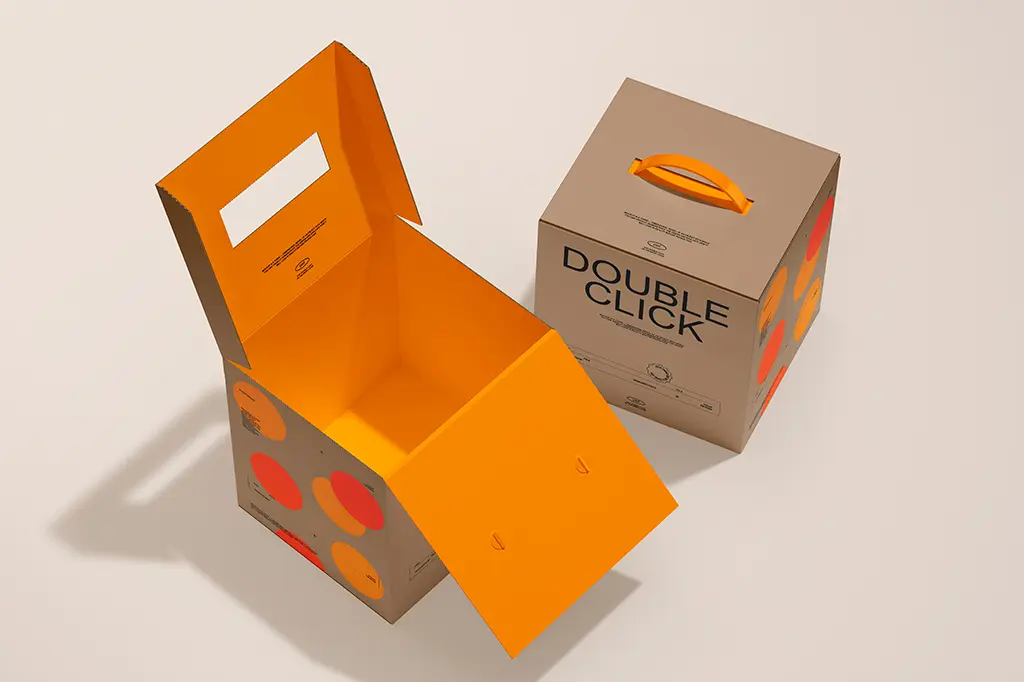
Of all standard packaging materials, kraft tends to offer the best combination of cost, brand flexibility, and sustainability credentials. It accepts both digital and offset printing well, and the natural board color can actually reduce ink coverage requirements - which lowers printing cost further. It works particularly well for food products, personal care items, and handmade goods. The limitation is structural: kraft board is not suited to heavy products or direct shipping without an outer layer.
If your brand emphasizes sustainability, kraft is worth knowing that most kraft paperboard is produced from recycled fibers or FSC-certified sources, which is increasingly relevant to buyers who check packaging claims. You can explore cheap custom paper boxes in kraft and coated paperboard across a range of standard and custom sizes.
Corrugated - The Smarter Choice for Anything That Ships
Unlike folding carton, corrugated is designed to absorb impact. E-flute corrugated is the thinnest and most common for retail-style boxes; B-flute adds more cushioning for heavier or more fragile products. For eCommerce brands, corrugated has an underappreciated shipping advantage: its strength-to-weight ratio means you can often use a lighter, smaller box than you might with stiffer materials - which reduces DIM weight charges. Our custom printed corrugated boxes are available in both E and B flute with full-color printing options.
Folding Cartons - For Retail Presentation on a Budget
Folding cartons are the standard for consumer goods sold on retail shelves: supplements, candles, personal care, small electronics accessories. They print well, store flat, and cost less per unit than corrugated at comparable quantities. That said, they are not built for direct-to-consumer shipping - the board is too thin to handle transit stress without an outer box. If you are deciding between these two for a dual-channel brand (retail and online), the practical answer is often to use folding cartons for retail and corrugated for fulfillment. Browse our range of custom folding boxes to see what is possible across different stock weights.
Rigid Boxes - Worth the Premium Only Under the Right Conditions
Rigid boxes cost significantly more and are justified when the product price supports it. A useful threshold: if your product retails for less than $25–$30, a rigid box will represent a high enough percentage of product value that the margin math becomes difficult. For products above that range - jewelry, premium skincare, spirits, electronics - the unboxing experience a rigid box creates can genuinely support the price point. For brands that need the look of a rigid box but want lower shipping volume, our collapsible rigid boxes fold flat for storage and transit, which cuts freight costs compared to pre-assembled rigid options.
Digital Printing vs Offset Printing: Which Costs Less for Your Run Size?
The printing method you choose matters as much as the material, especially at lower quantities.
| Factor | Digital Printing | Offset Printing |
|---|---|---|
| Setup cost | None | $100–$350+ per job (plates) |
| Minimum viable run | 50–300 units | 500–1,000 units |
| Unit cost at low volume | Lower | Higher (setup not spread) |
| Unit cost at high volume | Higher | Significantly lower |
| Color accuracy | Good | Excellent - Pantone support available |
| Best use case | Tests, seasonal SKUs, small batches | Established products, large volumes |
For most box types, the break-even between digital and offset printing falls somewhere between 500 and 800 units - though this varies by supplier and box structure. Below that range, digital is typically more cost-effective in total. Above it, offset's lower per-unit cost usually outweighs the plate fees. When in doubt, ask your supplier for side-by-side quotes at your actual quantity before committing. More on how these methods compare in practice: print methods used for custom boxes.
Ten Ways to Actually Reduce Your Custom Box Cost
These work across different brand sizes and order volumes. Which ones apply most depends on where you are:
- Under 500 units (testing stage): Focus on tips 3, 5, and 9 below.
- 500–2,000 units (growing brand): Tips 1, 2, 4, and 6 will move the needle most.
- 2,000+ units (scaling): Tips 7, 8, and 10 offer the largest savings at your volume.
- Right-size your box dimensions. Match internal dimensions to your product with no more than 2–3 cm clearance per side. Smaller boxes mean less material, less void fill, and often lower DIM weight charges in shipping.
- Order at quantity tiers, not on demand. If you currently place small orders every few weeks, consolidate into larger quarterly runs. The per-unit saving between 300 and 1,000 units is often 40–55%.
- Use digital printing for runs under 500 units. Avoids plate fees entirely. For test products or limited editions, this is almost always cheaper in total cost.
- Limit ink coverage on simple designs. Clean designs with one or two colors and a natural board background cost less to produce and often look more deliberate than heavy full-bleed layouts.
- Skip premium finishes on low-margin products. Foil, embossing, and spot UV add value when the product supports a premium price. On everyday items, matte lamination is typically sufficient and costs noticeably less.
- Standardize dimensions across your product range. Using three or four shared box sizes instead of custom dimensions for every SKU reduces tooling costs and simplifies inventory.
- Use corrugated for shipping; reserve folding carton for retail. There is no practical reason to ship products in retail-presentation boxes unless the box is part of the retail product itself.
- Plan orders 4–6 weeks ahead. Rush surcharges are an avoidable cost. They typically add 15–25% to production cost, depending on the supplier and timeline.
- Request a pre-production sample before full runs. A sample run costs between $30–$100 but can prevent a full production error in dimensions, color, or structure. Our quality management process includes pre-production samples as a standard step for new orders.
- Source directly from the manufacturer. Buying through a reseller or packaging broker adds a pricing layer that brands often pay without knowing it. For brands with consistent volume, factory-direct custom box packaging sourced from a manufacturer typically delivers meaningful cost reduction over time.
For brands just getting started, our small-batch custom packaging options are specifically designed for lower MOQs without requiring large upfront commitments.
Four Mistakes That Make Packaging Cost More Than It Should
Choosing rigid boxes for a low-margin product. A brand selling a $14 candle once switched from a folding carton to a rigid box because it "felt more premium." The rigid box cost $3.80 per unit - 27% of the retail price. After customer feedback showed no meaningful difference in perceived value, they switched back to a laminated folding carton at $0.55 per unit. The premium look came from the box design, not the box structure.
Placing frequent small orders instead of planned large ones. Ordering 200 units every month costs substantially more per box than ordering 800 units every quarter. If your product has reasonably stable demand, this is one of the simplest cost reductions available without changing anything about the box itself.
Printing full CMYK on a kraft box. Kraft board has a warm brown tone that shows through light ink coverage. A full-color white-background design printed onto kraft requires a white base layer, which adds cost and often looks worse than a design made for the substrate. Designing with the material in mind - not against it - produces better results at lower cost. See examples of what well-designed cheap corrugated boxes and kraft packaging can look like with thoughtful print treatment.
Oversizing packaging to feel "safe." A box with 6–8 cm of clearance around the product requires more filler material and often pushes shipments into a higher DIM weight tier. Tight, right-sized packaging protects products better anyway - the product moves less in transit.
How to Tell If a Cheap Box Still Looks Professional
The original concern behind this topic is real: affordable packaging can look cheap if the wrong decisions are made. Here are four things to check when evaluating a sample or existing supplier:
- Board weight and rigidity. The box should not flex significantly when held at a corner. For folding cartons, 350–400 gsm is a common range for retail-quality boxes; lighter than 300 gsm often shows in hand feel.
- Print registration accuracy. Holding the box up to light should show that color elements align precisely at edges. Misregistration - where colors are slightly offset from each other - is a sign of lower-quality press control, not cheaper material.
- Score and fold quality. Fold lines should be clean and tight, with no cracking on the outer surface. Rough or cracked folds usually indicate either too-light board for the design or inadequate scoring during production.
- Color consistency across the run. Request a spot-check of five to ten boxes from different positions in the batch. Significant color variation across units is a process control issue, not an inherent feature of affordable packaging.
For brands that need custom product packaging for small businesses at accessible price points, the quality standard above is achievable at even modest order quantities when working with a manufacturer that runs consistent process controls. You can review our approach to production quality directly on our quality management page.
Frequently Asked Questions
How much do cheap custom boxes cost per unit?
Kraft and folding carton boxes start around $0.25–$0.60 per unit at 1,000 pieces with standard printing. Corrugated typically runs $0.40–$0.90. Custom mailer boxes fall in the $0.80–$1.80 range. Rigid boxes start at $2.50 or more. All figures are reference ranges - actual pricing depends on your dimensions, print specification, and quantity.
What is the cheapest packaging material for custom boxes?
Kraft paperboard is generally the lowest-cost option for lightweight retail products. Standard corrugated (E-flute) is similarly priced and adds meaningful transit protection for products that ship directly to customers.
Can I order custom boxes with a low minimum?
Digital printing makes low-minimum runs practical - some suppliers accept orders from 50–100 units, though per-unit cost at that quantity is noticeably higher than at 500+. For most brands, 300–500 units is the practical minimum where both cost and quality become reasonable. See our guide on minimum order quantity for product box printing for a full breakdown.
Is digital printing cheaper than offset for small runs?
Yes, for most runs under 500 units. Digital printing has no plate setup fees, which makes the total cost lower at low quantities. Offset becomes more cost-effective as volume increases - typically above 500–800 units for standard box types.
How does box size affect shipping cost?
Carriers like UPS and FedEx use dimensional weight pricing, which means packages are billed based on the larger of actual weight and package volume divided by a carrier-specific DIM factor. An oversized box can push a light shipment into a higher billing tier. Right-sizing packaging reduces this cost directly.
Are cheap custom boxes still good quality?
Quality depends on material selection and production standards, not price alone. A well-made kraft folding carton with clean print registration and proper board weight can look and feel professional at a low per-unit cost. The risk with very cheap options is inconsistent print quality or dimensional inaccuracy - which is why requesting a pre-production sample before committing to a full order matters.
Next Steps
Getting cheap custom boxes that still look good comes down to making deliberate decisions rather than defaulting to what appears premium. Match your material to your product's actual needs, order at quantities that reduce setup cost per unit, choose the right printing method for your run size, and if possible, source directly from a manufacturer.
If you want to find out what your specific boxes would cost, we are happy to provide a detailed quote or send a sample before you commit to a full production run. Request a quote here, or browse our full range of box printing options to find a starting point that fits your product and budget.


