

Rigid box types should be organized across four dimensions-structure, opening method, display, and transport-because a similar-looking box can use different structures with very different cost and stability, the opening style changes the unboxing experience and ease of use, the display approach affects how the product presents on shelf and during unboxing, and transport needs determine protection, durability, and shipping/storage efficiency. Using this framework helps you quickly match the right box style to your product.
What Is a Rigid Box?
A rigid box (often called a setup box) is a premium packaging box made from thick greyboard/chipboard that's formed into shape and wrapped with decorative wrap paper, so it stays stiff and gift-ready-unlike a folding carton, which is made from thinner paperboard and ships flat before being folded into shape.
Rigid boxes are commonly used for gift boxes, consumer electronics, jewelry and watches, perfume and fragrance, and multi-item sets/kits, where protection and a luxury unboxing experience matter.

The 3 Ways People Classify Rigid Box Types
By Structure Family (Core Construction)
This is the most manufacturing-focused way to classify rigid boxes-based on how the box is built.
- Telescoping (Two-Piece / Lift-Off Lid): A separate lid and base that fit together (classic gift box style).
- Hinged / Clamshell: Lid and base are connected, opening like a book or clamshell (often paired with magnets or a closure tab).
- Drawer / Sliding: An outer sleeve with an inner tray that slides out (matchbox-style unboxing).
- Collapsible (Foldable Rigid): A rigid-feel box engineered to fold flat for shipping/storage, then assembled into shape.
By Opening Experience (Unboxing Feel)
This approach groups boxes by how the customer interacts with them-useful for branding and presentation.
- Lift-off lid: Traditional "reveal" moment; clean and familiar.
- Pull-out: Sliding drawer or tray for a staged, premium reveal.
- Flip-open: Hinged opening for a book-like presentation.
- Magnetic snap: A secure, high-end closure with a satisfying open/close.
- Ribbon pull: Adds elegance and makes lifting trays or products easier.
By Purpose (Performance Goal)
This classification starts with the job the packaging must do-helpful for choosing the "right" type quickly.
- Gift-ready: Prioritizes luxury look, tactile finishes, and reusability.
- Display-first: Optimized for shelf presence and unboxing presentation (often with windows, inner printing, or multi-layer trays).
- Protection-first: Built around secure inserts, tighter fit, and shock resistance for fragile/high-value items.
- Shipping-friendly: Designed to reduce volume and damage risk in transit (commonly collapsible rigid boxes and protective outer packing).
Rigid Box Types: 20+ Popular Styles Explained

Two-Piece Rigid Box (Lift-Off Lid / Telescoping Box)

What it is: A classic rigid box made of two parts-a separate lid that telescopes over a base.
- Best for: Gift boxes, product sets, fashion accessories, general retail packaging.
- Pros: Timeless look, cost-friendly structure, widely adaptable across industries.
- Watch-outs: The lid-to-base fit (clearance) must be controlled for a premium feel; lid depth affects how "tight" or "smooth" the opening feels.
- Custom options: Partial lid or deep lid, full interior wrap, ribbon pull tab, printed inner base.
Shoulder & Neck Rigid Box

What it is: A rigid box with an inner "shoulder/neck" piece that can be visible as a design feature or hidden for a seamless look.
Best for: Phone-style packaging, jewelry, high-end small items, premium sets.
Pros: Stable positioning, layered luxury look, stronger "unboxing ceremony."
Watch-outs: Neck height and exposed edge accuracy matter; tolerances are more sensitive than a standard two-piece box.
Custom options: Exposed or hidden shoulder, matte/gloss lamination, specialty paper wraps, foil stamping, deboss/emboss.
Three-Piece Rigid Box

What it is: A three-part construction with a separate lid, a distinct neck (collar/shoulder), and a base-more defined than typical shoulder & neck variations.
Best for: Premium packaging that needs a stronger structural identity and a "layered reveal" presentation.
Pros: Enhanced rigidity and alignment, elevated perceived value, excellent for staged unboxing.
Watch-outs: More components mean higher assembly complexity and tighter tolerance control.
Custom options: Custom neck height, contrasting neck color, inner printing, premium wraps and textures.
Hinged Lid Rigid Box

What it is: Lid and base are connected as one unit and open like a book or clamshell.
Best for: Gifts, collectibles, brand presentation packaging, premium kits.
Pros: One-piece convenience, strong presentation, easy to display and reclose.
Watch-outs: Hinge areas can crack if not reinforced; wrap precision and corner finishing are critical.
Custom options: Paper hinge or metal hinge, inner lining, closure tab, ribbon restraint, corner reinforcement.
Magnetic Closure Rigid Box &Magnetic Flip Box

What it is: A hinged rigid box with embedded magnets that "snap" shut for a luxury close.
Best for: High-end gifts, cosmetics, electronics accessories, influencer/PR boxes.
Pros: Premium feel, easy open/close, high reusability and brand recall.
Watch-outs: Magnet placement and polarity alignment are crucial; transit vibration can affect closure; added components increase cost.
Custom options: Single/double/multi-magnet, hidden magnets, alignment features, dust-free inner lamination, soft-touch finishes.
Book-Style Rigid Box

What it is: A "book-like" rigid box with a spine effect-often hinged, sometimes magnetic-designed to open like a hardcover book.
Best for: Luxury gifting, storytelling brands, presentation sets.
Pros: Strong shelf presence, ideal for branded storytelling, great for premium unboxing.
Watch-outs: Spine and wrap alignment need precision to avoid skewing or wrinkling.
Custom options: Window cut-out, inner "page" graphics, ribbon holder, inner booklet pocket, magnetic or tab closure.
Drawer Rigid Box

What it is: An outer sleeve with a sliding inner tray (drawer) that pulls out.
Best for: Jewelry, perfume, accessories, gift cards, small premium items.
Pros: Premium pull-out ritual, easy layering and compartment design, good for sets.
Watch-outs: Drawer tightness must be balanced (not too loose or too tight); friction wear on wrap paper needs consideration.
Custom options: Ribbon pull, double drawers, stopper/limit structure, anti-scratch lamination, compartment inserts.
Sleeve + Tray Rigid Box

What it is: A rigid tray paired with a sleeve (slipcase) that slides on/off-often used as an outer "upgrade" layer.
Best for: Electronics, gift sets, premium outer packaging for retail kits.
Pros: Adds premium look with relatively simple structure; sleeve offers extra branding area.
Watch-outs: Sleeve tightness and opening direction affect user experience; poor fit can feel cheap.
Custom options: Spot UV, full lamination, thumb notch/opening cut, inner print, textured specialty paper.
Collapsible / Foldable Rigid Box

What it is: A rigid-feel box designed to fold flat for shipping and storage, usually assembled into shape with magnets.
Best for: E-commerce shipping, saving warehouse space, high-volume programs.
Pros: Ships flat to reduce freight and storage costs while still delivering a rigid "luxury" feel.
Watch-outs: Fold-line durability, magnet alignment, and assembly experience must be engineered carefully.
Custom options: Triangle corner patches or hidden corner construction, different fold patterns, soft-touch lamination, magnetic flap variations.
Fold-Flat Hinged Rigid Box
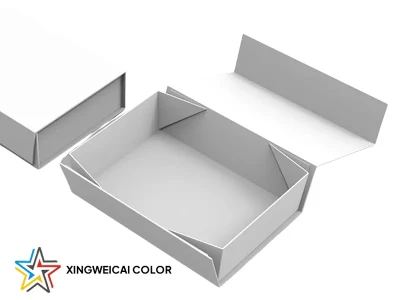
What it is: A collapsible rigid box that folds flat without magnetic closure-using structural folds, tabs, or adhesive solutions instead.
Best for: Cost-sensitive flat-pack projects that still need a premium rigid look.
Pros: Flat shipping benefits with lower component cost than magnetic styles.
Watch-outs: Assembly steps can be less intuitive; durability depends heavily on fold design and adhesive strength.
Custom options: Tab-lock or adhesive-assisted assembly, reinforced fold lines, integrated locking features.
Ribbon Lift Rigid Box

What it is: A rigid box design that uses ribbon pulls to lift the product or an inner tray cleanly from the base.
Best for: Perfume, jewelry, fragile items, premium small products.
Pros: Strong protection and a refined, controlled reveal; reduces finger contact with the product.
Watch-outs: Ribbon load and anchoring strength; adhesive failures can ruin the unboxing experience.
Custom options: Double ribbon pulls, hidden ribbon channels, lift-out tray, molded insert + ribbon combo.
Double Door / Gatefold Rigid Box

What it is: Two opening panels (like doors) that open outward to reveal the product-often combined with magnets.
Best for: Luxury gifts and display-first sets, premium brand storytelling kits.
Pros: Maximum reveal area, dramatic unboxing, excellent for premium branding.
Watch-outs: Alignment is difficult; more magnets/closures increase labor and cost.
Custom options: Magnetic points on each door, center platform or tray, inner printing, ribbon restraints, multi-panel layouts.
Rigid Box with Insert Trays
What it is: A rigid box designed with multiple inner trays (stacked layers) for organized presentation.
Best for: Kits, gift sets, multi-SKU bundles, sample sets.
Pros: Clean organization, easy product access, premium "layer-by-layer" reveal.
Watch-outs: Tray height must match lid depth; stacking tolerances can create rattling or misalignment if not controlled.
Custom options: Removable trays, finger notches, mixed insert materials, printed tray graphics, divider combinations.
Rigid Box with Window
What it is: A rigid box featuring a transparent window film (PVC/PET) or an open cut-out window to show the product.
Best for: Gift packaging where visibility boosts purchase confidence.
Pros: Improves shelf conversion by letting customers see the product immediately.
Watch-outs: Sustainability concerns (especially PVC), scratching risk, glue marks/overflow around the film.
Custom options: PET film, anti-scratch film options, open-window alternatives (die-cut reveal), partial reveal designs.
Round / Oval Rigid Box

What it is: A rigid box in a round/oval shape-often called a tube or cylinder box.
Best for: Fragrance, candles, tea, premium gifting.
Pros: Strong differentiation, standout shelf presence, premium tactile experience.
Watch-outs: Rolling during transport; inserts must secure the product to prevent movement.
Custom options: Inner trays, foam/EVA inserts, shoulder-neck cylinder styles, full wrap printing, foil stamping around the circumference.
Custom Shaped Rigid Box

What it is: Rigid boxes made in non-standard shapes using custom tooling and structure design.
Best for: Seasonal gifts, limited editions, special brand campaigns.
Pros: Highly memorable and visually distinctive.
Watch-outs: Tooling cost, yield/defect rate, and lead time are typically higher than standard shapes.
Custom options: Custom die-cuts, multi-part structures, specialty paper, protective packaging for shipping.
Rigid Box with Handle

What it is: A rigid box integrated with a handle (rope, ribbon, plastic, or paper handle) for easy carrying.
Best for: Takeaway gift boxes, retail-ready packaging, event kits.
Pros: Convenient for customers and increases gift-ready value.
Watch-outs: Handle strength and reinforcement; hole area can tear without proper backing; load testing is essential.
Custom options: Rope/ribbon handles, reinforced handle patches, metal eyelets, branded handle tags.
Rigid Box with Divider
What it is: A rigid box with a grid/partition divider to separate multiple items inside.
Best for: Mini bottles, perfume vials, accessories, multi-piece sets.
Pros: Prevents collision, improves organization, supports neat presentation.
Watch-outs: Divider thickness and locking method; poor interlocking can collapse during handling.
Custom options: Cross-divider grids, removable dividers, mixed divider + tray systems, printed partitions.
Presentation Rigid Box

What it is: A "hybrid" category that combines premium structures (often magnetic/hinged) with inserts and high-end finishing to maximize unboxing impact.
Best for: PR boxes, flagship gift sets, premium brand launches.
Pros: Strong brand storytelling, elevated perceived value, ideal for content creation and gifting.
Watch-outs: Many components increase cost and production complexity; requires careful prototyping and QC.
Custom options: Inside-lid printing, booklets/cards, sleeves, layered trays, premium specialty papers, coordinated finishes.
How to Choose the Right Rigid Box Type?

Based on Product Needs
Start with what the box must do for the product. For fragile items (glass bottles, perfume, ceramics), prioritize rigid structures with secure inserts (EVA/foam, molded pulp, paperboard) and consider styles that reduce movement, such as shoulder & neck, hinged, or two-piece with a lift tray. For heavier products, focus on stronger board thickness, reinforced corners, and a stable base-often a two-piece or shoulder & neck design with a tight fit. For multi-item sets, choose formats that organize components cleanly, like drawer boxes, multi-layer trays, or divider grids. If display is the priority, go for presentation-forward options such as book-style, magnetic flip, gatefold, or inner-printed designs that reveal the product like a showcase. For e-commerce shipping, durability and efficient packing matter most-use protective inserts, consider an outer shipping carton, and evaluate collapsible rigid boxes to reduce logistics cost.
Based on Budget & Complexity
Rigid box cost is heavily influenced by structure complexity. In general, more parts + more hand-assembly steps = higher labor, and specialized designs may require custom tooling and tighter QC. Complex boxes (magnetic, gatefold, multi-layer, custom shapes) can also affect yield-small alignment issues become visible and increase rework. If budget is tight, a two-piece or sleeve + tray structure with smart finishing (foil, emboss, textured wrap) often delivers a premium look without the highest assembly cost. If you need a "wow" unboxing for marketing, reserve complexity for the elements customers actually touch (closure feel, reveal moment, insert presentation).
Based on Shipping & Storage
Shipping and warehousing can change the "best" type more than most people expect. Non-collapsible rigid boxes take up more volume, which can increase storage space and freight cost-especially for large sizes or high quantities. Collapsible/foldable rigid boxes ship flat and can significantly reduce logistics cost, but they introduce considerations like fold-line durability and assembly experience. If your supply chain includes long-distance shipping, third-party fulfillment, or limited warehouse space, comparing packed volume per unit between styles is often the fastest way to make a cost-effective decision.
Based on Unboxing Experience
Different structures create different "moments." Lift-off lid boxes feel classic and premium with a clean reveal; drawer styles create a staged, satisfying pull-out experience that works well for small luxury products; hinged or magnetic flip boxes feel convenient and reusable, making them popular for gifts and PR kits; and double-door/gatefold designs deliver the most dramatic presentation for high-end launches and display-first sets. Choose the unboxing style that matches your brand positioning and customer behavior-whether that's quick access, ritual-like reveal, or a presentation that's designed to be shared.
EVA / Foam Inserts (Heavy Protection)
Best for: Perfume bottles, glass products, electronics, fragile or high-value items.
Why it works: EVA/foam absorbs shock and holds products tightly, which is especially important for two-piece, shoulder & neck, drawer, and magnetic flip boxes where a secure fit prevents rattling.
Common upgrades: Velvet-laminated foam, finger cut-outs, multi-cavity layouts for sets.
Paperboard Inserts (Cost-Effective + Eco-Friendly)
Best for: Cosmetics, skincare, lightweight kits, retail sets.
Why it works: Paperboard inserts provide clean organization and strong branding value at a lower cost, making them ideal for sleeve + tray, drawer, and multi-layer tray boxes.
Common upgrades: Printed insert surfaces, folding partitions, glued platforms, pull tabs.
Flocked Inserts (Premium Touch)
Best for: Jewelry, watches, luxury accessories.
Why it works: Flocked (velvet-like) surfaces elevate perceived value and prevent scratching. They pair well with presentation-heavy styles like hinged, book-style, magnetic closure, and two-piece gift boxes.
Common upgrades: Removable cushions, soft-touch lining, custom cut cavities.
Molded Pulp Inserts (Sustainable + Shipping-Friendly)
Best for: Larger items, e-commerce packaging, brands prioritizing sustainability.
Why it works: Molded pulp is recyclable and provides reliable cushioning, making it a strong fit for collapsible rigid boxes and shipping-focused programs, especially when combined with a protective outer carton.
Common upgrades: Custom molded shapes, multi-piece pulp sets, printed sleeves for branding.
Finishes That Elevate Each Type
The best rigid box finishes aren't just decorative-they're chosen to match how each box is handled, opened, displayed, and reused. Below are finish combinations that consistently work well by box type.

Magnetic Closure / Book-Style Boxes
Recommended finishes: Foil stamping + emboss/deboss + matte (or soft-touch) lamination
Why it works: These styles are "presentation-first" and frequently re-opened, so matte/soft-touch gives a luxury feel, foil adds premium contrast, and emboss/deboss creates tactile branding that reads like a hardcover product.
Pro tip: Keep foil areas intentional (logos, borders, icons) to avoid over-design and reduce cost.
Drawer Boxes (Pull-Out / Matchbox Style)
Recommended finishes: Scuff-resistant lamination + spot UV + pull tab (ribbon or die-cut notch)
Why it works: Drawer boxes experience more friction and repeated contact, so a durable film helps prevent edge wear and scratches. Spot UV highlights key branding without sacrificing durability, and a pull feature improves the user experience.
Pro tip: If using specialty paper, test friction and wear on the sleeve edges during sampling.
Round / Tube (Cylinder) Rigid Boxes
Recommended finishes: Specialty paper wrap + wrap-around foil stamping
Why it works: Cylinders stand out naturally on shelf; textured or patterned specialty paper amplifies that premium feel. Foil around the circumference creates a "360° brand moment" that's hard to miss.
Pro tip: Consider foil registration and seam placement so the wrap joint stays clean and hidden.
Window Rigid Boxes (PVC/PET or Open Window)
Recommended finishes: Anti-scratch / anti-fingerprint lamination (especially on dark colors)
Why it works: Window boxes are inspected closely and handled more in retail. Anti-scratch and anti-fingerprint films help keep the box looking new, while reducing smudges around the window area.
Pro tip: Use clean adhesive control around the film edge to prevent glue marks, and consider PET as a more brand-friendly option than PVC where possible.
FAQ
Q: What's your MOQ for custom rigid boxes?
A: MOQ depends on the box type, size, materials, and finishing. As a rule, simpler structures (two-piece, sleeve + tray) can start lower, while more complex styles (magnetic, gatefold, custom shapes, multi-layer trays) usually require higher quantities to offset tooling and setup.
To get an accurate MOQ: share your box style, size, insert type, and target finishes-we'll recommend the most cost-effective production route.
Q: How long does sampling take-and what do I need to provide?
A: Sampling time varies by complexity. A plain white sample is fastest; a fully finished pre-production sample (with printing/finishes/inserts) takes longer because it involves multiple processes and approvals.
For faster sampling: provide (1) product size/weight, (2) target box type, (3) insert preference, (4) reference photos, and (5) your branding files (AI/PDF). If you don't have dielines, we can create them after confirming inner size and structure.
Q: Will a more complex structure affect yield and lead time?
A: Yes. Complex rigid boxes typically involve more components, more hand-assembly steps, and tighter alignment requirements, which can reduce yield (more rework) and extend lead time-especially for magnetic closures, gatefold doors, custom shapes, or multi-layer trays.
How to control risk: lock the structure early, build a signed sample, define acceptance tolerances (fit, gaps, magnet alignment), and avoid last-minute changes to board thickness or finishes.
Q: Can sustainable materials still look and feel "luxury"?
A: Absolutely-"sustainable" doesn't have to look basic. Many premium rigid boxes use paper-based wraps, water-based coatings, paperboard inserts, or molded pulp while still achieving a luxury appearance through texture, emboss/deboss, and smart print design.
Best approach: choose a premium-feel specialty paper and pair it with tactile finishing; if you want maximum recyclability, minimize plastic windows and consider paper-based alternatives.
Q: How do I prevent size mismatch, rattling, or product movement?
A: Most problems come from unclear sizing and missing "real-world" allowances.
Best practice checklist:
Send product dimensions + weight and note any fragile points (caps, corners, glass).
Confirm inner size (ID) and whether you need "snug fit" or "easy take-out."
Select an insert that matches movement risk: EVA/foam for fragile/heavy, paperboard for sets, molded pulp for shipping-focused programs.
Request a fit test at sampling: shake test + drop/transport simulation for e-commerce.
Q: What affects the unit price the most?
A: The biggest cost drivers are usually: box size, structure complexity, board thickness, wrap paper choice, insert type, and finishing (foil/emboss/spot UV/soft-touch).
If cost is tight, you can often save by simplifying structure while keeping a premium feel via specialty paper + selective foil/emboss.
Q: What information do you need for an accurate quote (so we don't go back and forth)?
A: Provide these 8 items and you'll get a clean quote faster:
box type/style, 2) inner size (L×W×H), 3) product size/weight, 4) insert type + cavity size, 5) material/board thickness preference, 6) printing + finishes, 7) quantity, 8) destination + required delivery date.
Q: How do we ensure color and finish consistency in mass production?
A: Approve a physical pre-production sample and confirm key references (Pantone/CMYK targets, foil color, lamination type, paper lot). For premium programs, specify critical areas (logo placement, foil sharpness, corner wrapping standards) and include an AQL/QC plan.


