

The size of a shipping box does more than hold a product in place. It determines how much you pay in freight, how well items survive transit, and whether the unboxing experience reinforces or undermines your brand. Carriers like FedEx, UPS, and USPS factor box dimensions into their pricing through dimensional weight formulas and size-limit thresholds, so a box that is even slightly too large can raise costs with no added benefit.
This guide covers the most common standard shipping box sizes used across eCommerce, retail, and general logistics. It explains how box dimensions are measured, how to choose the right size for specific product types, and when it makes sense to move from stock boxes to custom packaging.
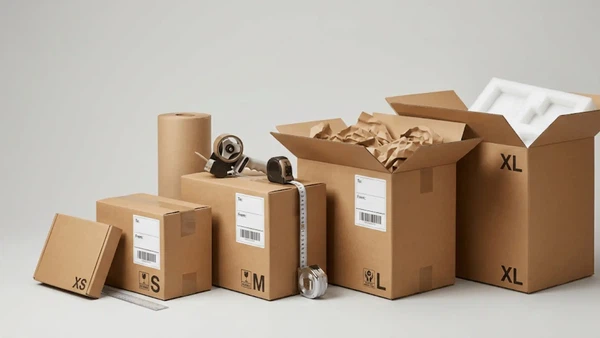
How Shipping Box Dimensions Are Measured
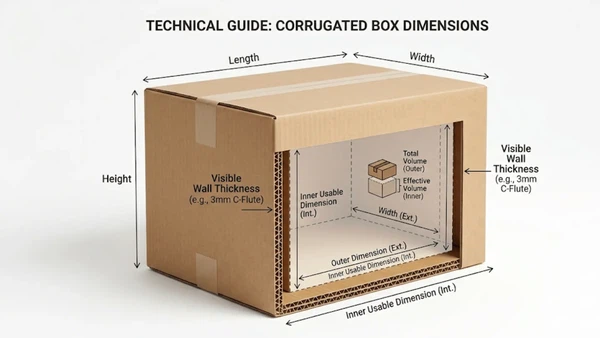
Length, Width, and Height (L × W × H)
Box dimensions follow a standard order: Length × Width × Height. The length is the longest side, the width is the next longest, and the height is the remaining side. A box listed as 12 × 9 × 4 inches measures 12 inches long, 9 inches wide, and 4 inches tall. If you sell internationally, providing both inches and centimeters avoids conversion errors during procurement.
Inner vs. Outer Box Dimensions
This distinction catches many first-time buyers. Outer dimensions describe the external footprint of the box. Inner dimensions describe the usable packing space inside, after accounting for the thickness of the corrugated board walls.
The difference matters more than it might seem. A single-wall corrugated box typically has a wall thickness of roughly 3–4 mm per side. That means a box with outer dimensions of 12 × 9 × 4 inches might offer only about 11.7 × 8.7 × 3.7 inches of usable interior space. Once you add tissue paper, foam inserts, or a branded card, the margin shrinks further. Always measure your product first, then confirm whether the box listing refers to inner or outer dimensions before ordering.
Standard Shipping Box Size Chart
No single size chart applies to every carrier or every product category. However, certain sizes appear repeatedly across corrugated box suppliers because they match the most common shipping needs. The sizes below represent widely available stock options from packaging distributors, not carrier-specific standards.
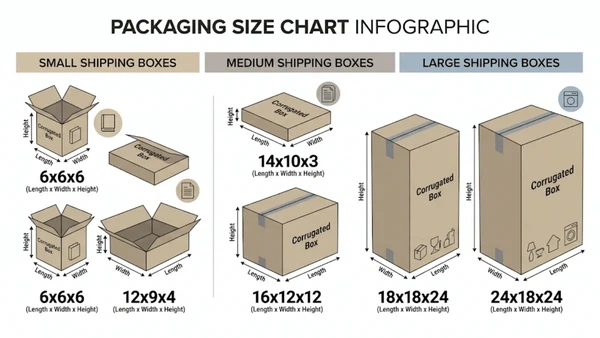
Small Shipping Box Sizes
Small boxes suit compact, lightweight, or giftable products where presentation and snug fit matter.
| Common Size (inches) | Typical Use | Notes |
|---|---|---|
| 4 × 4 × 4 | Jewelry, single candles, small accessories | Minimal void fill needed; works well with a simple tissue wrap |
| 6 × 6 × 6 | Skincare jars, cosmetic sets, small kits | Leaves room for a thin foam insert or branded card |
| 9 × 6 × 2 | Flat eCommerce packs, phone cases, thin accessories | Mailer-friendly; often used with corrugated mailer-style closures |
| 12 × 6 × 6 | Hand tools, bundled beauty items, product sets | Elongated shape suits items that do not stack well in cube boxes |
Medium Shipping Box Sizes
Medium boxes cover the widest range of everyday eCommerce and retail orders.
| Common Size (inches) | Typical Use | Notes |
|---|---|---|
| 12 × 9 × 4 | Subscription boxes, folded garments, boxed sets | One of the most popular sizes for DTC brands shipping single-item orders |
| 14 × 10 × 3 | Apparel, accessories, flat-packed goods | Shallow depth keeps folded clothing neat and reduces void fill |
| 16 × 12 × 12 | Books, household goods, general retail items | Good all-purpose size; check dimensional weight at this volume |
| 18 × 18 × 16 | Multi-item orders, mid-size shipments | Approaches the threshold where dimensional weight often exceeds actual weight for lightweight goods |
Large Shipping Box Sizes
Large boxes are typically reserved for bulky, lightweight, or fragile shipments where extra cushioning space is essential.
| Common Size (inches) | Typical Use | Notes |
|---|---|---|
| 18 × 18 × 24 | Kitchen items, linens, larger retail packs | Monitor dimensional weight closely; a box this size can trigger higher charges for light products |
| 24 × 18 × 24 | Bedding, pillows, soft bulky goods | Often used for compressed or vacuum-packed soft goods |
| 20 × 20 × 34 | Hanging apparel, wardrobe-style packing | Verify length-plus-girth totals before committing to this size at scale |
| Flat specialty boxes | Framed art, screens, posters | Custom flat cartons often outperform stock sizes for fragile flat items |
These sizes are common stock options, not universal rules. Carriers publish their own measuring methods, dimensional weight practices, and size limits. Always confirm the latest standards from FedEx, UPS, or USPS before scaling a box choice across many shipments.
Common Box Sizes by Product Type
Beauty, Cosmetics, and Small Gift Items
For a single skincare set-say, a serum bottle, a moisturizer jar, and a sample sachet-a 6 × 6 × 6 inch corrugated box with a thin foam insert usually provides a secure, presentable fit. The key constraint is not just physical protection but perceived quality: if the items shift or rattle inside the box, the package feels careless even when nothing is damaged.
Brands shipping candles, perfume, or glass containers should add 0.5–1 inch of clearance on each side for cushioning material. A box that fits the product exactly on paper often turns out too tight once a corrugated divider or molded pulp tray is placed inside.
Apparel and Soft Goods
Folded clothing-t-shirts, scarves, lightweight knitwear-fits better in shallow rectangular boxes (such as 14 × 10 × 3 inches) than in deep cartons. A flat format keeps garments neat, reduces empty space, and makes the unboxing feel organized rather than stuffed.
For bulkier items like hoodies or bundled garments, move up to a deeper box only when the folded stack genuinely requires it. A common mistake is choosing a 12 × 12 × 12 box for a single folded hoodie that would fit in a 14 × 10 × 5 with less wasted volume.
Books, Documents, and Media
Books need boxes close to the product footprint. Too much empty space leads to corner damage, shifting, and bent edges during transit. For a standard trade paperback (roughly 9 × 6 × 1 inch), a box like 10 × 7 × 2 with a thin layer of kraft paper provides enough cushioning without excess void.
Electronics and Fragile Items
Electronics require a different sizing logic. The goal is not the smallest possible box but the smallest safe box. A Bluetooth speaker measuring 7 × 3 × 3 inches, for example, might need a 10 × 6 × 6 box to accommodate a molded foam insert, edge protectors, and a thin cardboard partition. The formula to keep in mind: product dimensions + cushioning thickness on all sides + presentation clearance = target inner dimension.
When an item is fragile-glass screens, ceramic goods, precision instruments-design the packaging system around protection first, then optimize the outer carton dimensions to match.
Subscription and eCommerce Orders
Subscription brands shipping a fixed monthly assortment benefit from standardizing on one or two box sizes that fit the most common order configurations. A compact shallow box (such as 12 × 9 × 4 inches) works for many single-product or two-product DTC orders. These sizes are easier to warehouse, brand, and pack consistently.
If your typical order includes three to five items of varying size, test two box options rather than defaulting to one oversized "universal" box. Keeping two stock sizes on hand often reduces dimensional weight charges more than any single box can.
How to Choose the Right Shipping Box Size
Step 1: Measure the Product or Product Set
Start with the actual item dimensions-not the size listed on a product page or a supplier estimate. Measure the individual product, the retail box if there is one, and the full bundle if multiple items ship together. If most orders include two or three items, size the shipping box for the real order pattern, not just the single-product case.
Step 2: Add Space for Protective Materials
Account for everything that goes around the product: tissue paper, bubble wrap, kraft paper, corrugated inserts, foam, dividers, branded cards, or samples. A product measuring 10 × 8 × 3 inches does not belong in a 10 × 8 × 3 box once real packing materials are factored in. As a working guideline, add at least 0.5–1 inch per side for non-fragile items, and 1.5–2 inches per side for fragile goods that need structured cushioning.
Step 3: Check Dimensional Weight and Shipping Cost
Carriers do not price shipments on actual weight alone. FedEx, UPS, and USPS all use dimensional weight pricing, which means a box can be light but still expensive to ship if it occupies too much space.
The basic formula is: (Length × Width × Height) ÷ DIM divisor = dimensional weight. Both FedEx and UPS use a DIM divisor of 139 for daily/contract rates (in inches, yielding pounds). USPS applies dimensional weight to Priority Mail parcels exceeding 1 cubic foot (1,728 cubic inches) and uses a divisor of 166. The carrier charges whichever is greater-actual weight or dimensional weight. For full details, see the FedEx dimensional weight guide and the UPS package dimensions page.
A practical example: a box measuring 18 × 18 × 16 inches has a cubic volume of 5,184 cubic inches. Divided by 139, the dimensional weight is approximately 38 pounds. If the actual product inside weighs only 8 pounds, you are still billed for 38 pounds. Choosing a 14 × 10 × 6 box (840 cubic inches, about 7 pounds dimensional weight) for the same product-assuming it fits safely-could cut the billable weight by more than 80%.
Step 4: Verify Carrier Size Limits
Each carrier enforces its own maximum size rules. Key thresholds to check before committing to a box size:
- USPS: Maximum combined length plus girth of 108 inches for most services (130 inches for USPS Ground Advantage oversized packages). Maximum weight is 70 pounds. Dimensional weight applies to Priority Mail parcels over 1 cubic foot. See the USPS parcel size standards.
- UPS: Maximum combined length plus girth of 165 inches. Maximum length of 108 inches. Maximum weight of 150 pounds. Packages exceeding 130 inches in length plus girth, 96 inches in longest side, 17,280 cubic inches in volume, or 110 pounds in weight trigger the Large Package Surcharge. See the UPS shipping dimensions and surcharge guidance.
- FedEx: Maximum combined length plus girth of 165 inches. Maximum weight of 150 pounds. Dimensional weight is calculated with a divisor of 139 for most account types. As of 2025, FedEx rounds each fractional dimension up to the next whole inch before calculating dimensional weight. See the FedEx dimensional weight page.
This step matters most for long, flat, or bulky shipments where length-plus-girth totals can approach carrier thresholds unexpectedly.
Step 5: Run a Physical Packing Test Before Ordering in Bulk
Before committing to a large quantity of stock boxes or a custom production run, test the actual packing process with real products and real materials. Check these five things:
- Does the product fit without forcing the box closed?
- Does the product stay in place, or does it shift and rattle?
- Do inserts, dividers, and branded materials fit as designed?
- Can the box be sealed cleanly and handled easily in a warehouse setting?
- Does the package look presentable when opened by the customer?
A hands-on test often reveals problems that spreadsheets and spec sheets cannot. One common discovery: a box that passes the dimension check can still feel wrong because the flap closure is too tight, or because the insert shifts during sealing.
Standard Boxes vs. Custom Shipping Boxes
When Standard Sizes Work Well
Stock shipping boxes are a practical choice when your products have common dimensions, your SKU mix varies from order to order, you need fast sourcing with low upfront commitment, and the box serves primarily as a transit container rather than a branding vehicle. For early-stage businesses or operations with fluctuating product lines, standard sizes offer flexibility without locking in a minimum order quantity for custom tooling.
When Custom Boxes Make More Sense
Custom boxes become worth the investment when your product has non-standard proportions (very flat, very tall, or L-shaped), when a stock size consistently leaves 30%+ void space, when the outer carton is part of the brand experience (subscription boxes, luxury goods, DTC skincare), or when shipping volume is high enough that even a small per-unit reduction in dimensional weight adds up. A custom box packaging solution can reduce wasted material, improve product protection, and create a more intentional presentation.
For businesses considering custom corrugated boxes, understanding corrugated box printing options and what corrugated means for boxes helps in selecting the right board grade and flute type for your shipping needs.
How Dimensional Weight Affects Shipping Cost
Dimensional weight is one of the most misunderstood factors in shipping cost. Many businesses focus on reducing product weight while overlooking box volume-even though volume often drives the bill.
Here is how the math works in practice:
| Box Size (inches) | Cubic Volume | DIM Weight (÷139) | DIM Weight (÷166) | Likely Billable Weight for a 5 lb Product |
|---|---|---|---|---|
| 10 × 8 × 4 | 320 in³ | ~3 lbs | ~2 lbs | 5 lbs (actual weight governs) |
| 14 × 10 × 6 | 840 in³ | ~7 lbs | ~6 lbs | 7 lbs at FedEx/UPS daily rates |
| 18 × 14 × 10 | 2,520 in³ | ~19 lbs | ~16 lbs | 19 lbs at FedEx/UPS daily rates |
| 24 × 18 × 18 | 7,776 in³ | ~56 lbs | ~47 lbs | 56 lbs at FedEx/UPS daily rates |
The takeaway: every inch of unnecessary box dimension inflates the billable weight. For lightweight products like apparel, supplements, or accessories, downsizing the box by even one standard size step can produce meaningful savings across hundreds or thousands of shipments.
Common Mistakes When Choosing Shipping Box Sizes
Sizing the box to the product's outer dimensions only. A product that measures 8 × 6 × 3 inches needs a box larger than 8 × 6 × 3 once you account for cushioning, inserts, and the corrugated wall thickness. Overlooking this is the most frequent cause of returns due to damage.
Using one "universal" box for every order. A single box size simplifies warehouse operations, but it almost always wastes space on smaller orders and inflates dimensional weight charges. Two or three well-chosen stock sizes typically outperform one oversized universal box.
Ignoring inner dimensions when ordering. Most box suppliers list outer dimensions. If you order based on outer specs without checking inner clearance, the box may be too tight once board thickness is subtracted. Confirm inner dimensions before placing a bulk order.
Overlooking dimensional weight on lightweight shipments. A large box containing a light product can cost far more to ship than expected. Run the DIM weight calculation before choosing a box, especially for products under 10 pounds.
Skipping a real-world packing test. A sample pack-out can prevent damage claims, repacking labor, and customer complaints. It costs almost nothing compared to the expense of discovering problems after thousands of boxes are already in your warehouse.
How Many Stock Sizes Should a Small Business Keep on Hand?
For most small eCommerce operations with fewer than 20 SKUs, two to three box sizes cover the majority of orders without excessive waste. A practical starting kit might include:
- A small box (such as 9 × 6 × 3 or 6 × 6 × 6) for single lightweight items
- A medium box (such as 12 × 9 × 4 or 14 × 10 × 5) for standard single-item or two-item orders
- A larger box (such as 16 × 12 × 12) for multi-item or bulky orders
Track which size you use most over a 30-day period. If one size accounts for more than 60% of shipments, that is the box to optimize first-either by fine-tuning its dimensions or exploring a custom packaging option at that volume.
Frequently Asked Questions
What is the most commonly used shipping box size for eCommerce?
There is no universal answer, but medium rectangular boxes in the range of 12 × 9 × 4 inches to 16 × 12 × 12 inches are among the most widely stocked sizes for eCommerce fulfillment. The right choice depends on your product mix, packing materials, and carrier rate structure.
Are box dimensions listed as inside or outside measurements?
Most stock box listings from suppliers use outer dimensions. Inner (usable) dimensions are typically smaller by 3–4 mm per side on single-wall corrugated boxes. Always confirm which measurement the supplier is listing before ordering, especially when insert fit is critical.
How much extra space should I leave inside a shipping box?
For non-fragile items with basic wrapping, 0.5–1 inch of clearance per side is usually sufficient. For fragile goods requiring foam or molded inserts, plan for 1.5–2 inches per side. The exact amount depends on the cushioning material and the product's sensitivity to impact.
Does a bigger box always cost more to ship?
Not always by list price, but often through dimensional weight. A box that is physically larger increases the calculated DIM weight, and carriers bill whichever is greater-actual weight or DIM weight. For lightweight products, a slightly larger box can significantly raise the shipping charge.
How do I calculate dimensional weight?
Multiply the box's length × width × height (in inches), then divide by the carrier's DIM divisor. For FedEx and UPS daily rates, the divisor is typically 139. For USPS Priority Mail, it is 166. If the resulting number exceeds the actual weight of the package, you pay the dimensional weight price. For a detailed walkthrough, visit the FedEx dimensional weight explainer.
When should I switch from stock boxes to custom boxes?
Consider custom sizing when your order volume is stable and predictable, your products have consistent dimensions, stock boxes consistently leave significant void space, or the packaging is a key part of your brand experience. Custom boxes typically require a minimum order quantity, so the switch makes the most financial sense once monthly shipment volume justifies the upfront tooling and production cost. Explore box printing options or custom box packaging to compare what is available.
What is the maximum package size for USPS, UPS, and FedEx?
USPS allows a maximum combined length plus girth of 108 inches for most services (130 inches for Ground Advantage oversized). UPS and FedEx both accept packages up to 165 inches in combined length and girth and up to 108 inches in length. Maximum weight limits are 70 pounds for USPS and 150 pounds for both UPS and FedEx. Additional surcharges may apply for packages exceeding oversize thresholds. Always verify the latest limits directly with your carrier before shipping at scale.
Final Recommendation
The best standard shipping box size is the one that fits your product with adequate protection, avoids unnecessary void space, and keeps dimensional weight in check. Start with actual product measurements, add realistic room for cushioning and inserts, verify your numbers against carrier size rules, and run a physical packing test before committing to bulk quantities.
If stock sizes consistently leave too much empty space, create dimensional weight problems, or fail to deliver the brand presentation you need, that is usually the signal to explore custom box packaging. For questions about corrugated shipping boxes, rigid box options, or gift box packaging, getting a sample and testing it with your actual product is always the most reliable next step.


