

What is a Duplex Box? A Comprehensive Guide to Its Printing Technology and Practical Applications
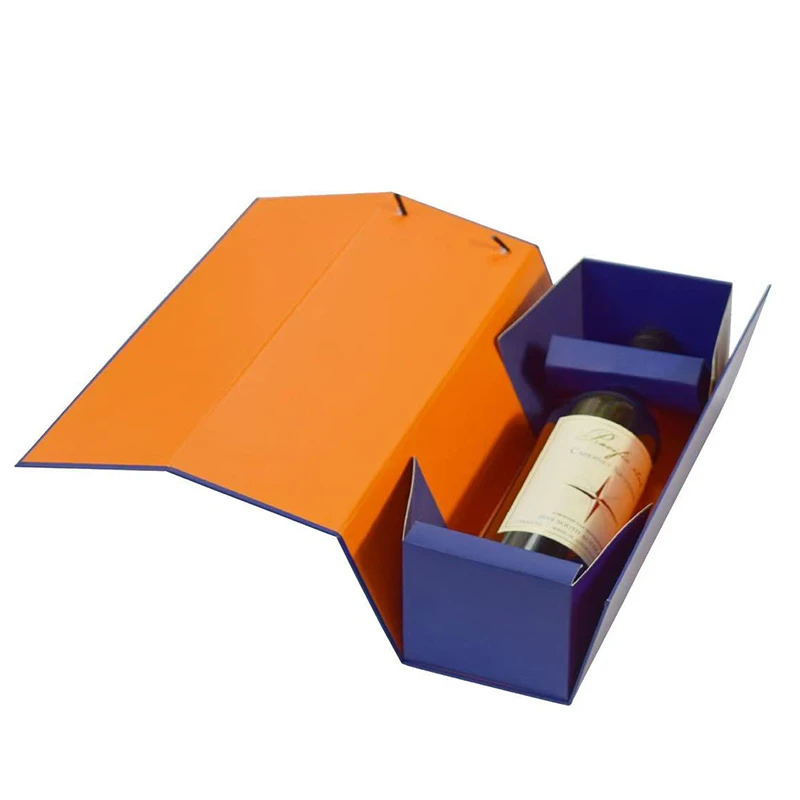
In the packaging industry, the term "duplex box" is frequently mentioned, but many people still have questions like "What is a duplex box?" Simply put, a duplex box refers to a type of packaging box made of duplex board-a paper material with two distinct layers: a high-quality surface layer (often coated or uncoated woodfree paper) and a sturdy base layer (usually kraft paper or recycled paper). This dual-layer structure endows duplex boxes with both excellent printing adaptability and sufficient structural strength, making them a popular choice in industries such as food, cosmetics, electronics, and gifts.
This blog will delve into the core connotations of duplex boxes, focus on the integration of offset printing, flexographic printing, UV curing printing and other core printing technologies with duplex boxes, combine user demand scenarios to explain practical applications, and simultaneously popularize professional knowledge such as printing process parameters and material matching, helping you fully understand the value of duplex boxes in packaging solutions.
1. What is a Duplex Box? Core Definitions and Structural Advantages
1.1 The Basic Concept of Duplex Boxes
To thoroughly answer "What is a duplex box?", we must first clarify its material foundation-duplex board. Unlike single-layer cardboard, duplex board is composed of two layers bonded by adhesive: the surface layer (also known as the "face paper") is made of high-grade woodfree paper with uniform fiber structure, smooth surface, and good ink absorption; the base layer (also known as the "backing paper") is made of thick kraft paper or recycled paper, which provides sufficient rigidity and load-bearing capacity.
The production process of duplex boxes typically includes die-cutting, creasing, folding, and gluing of duplex board. Its structural form can be adjusted according to needs, such as folding cartons, telescopic boxes, or special-shaped boxes. Due to the combination of "printable surface" and "stable structure", duplex boxes have obvious advantages over single-layer cardboard boxes in terms of appearance quality and protection performance.
1.2 Three Core Advantages of Duplex Boxes
Excellent printing adaptability: The smooth surface layer of duplex board can perfectly fit various printing technologies, reproduce fine patterns and bright colors, and solve the problem of poor printing effect of single-layer kraft paper boxes.
Balanced cost performance: Compared with high-grade packaging materials such as white cardboard and corrugated paper, duplex board achieves a balance between "printing effect" and "production cost", which is suitable for mid-to-high-end packaging needs with limited budgets.
Strong structural stability: The base layer of kraft paper enhances the hardness and compression resistance of the box body, which can effectively protect the internal products from collision and extrusion during transportation and storage.
For example, in the food packaging field, duplex boxes can not only print exquisite product patterns and ingredient information through high-quality printing, but also rely on their structural strength to avoid deformation when stacked; in the gift packaging field, they can achieve a high-end visual effect similar to white cardboard boxes at a lower cost, improving the gift-giving experience.
2. Key Printing Technologies for Duplex Boxes: Principles, Advantages and Application Scenarios
The printing effect of duplex boxes directly determines the product's shelf appeal. Choosing the right printing technology needs to consider factors such as pattern complexity, color requirements, production volume, and cost budget. Below are the four most commonly used printing technologies for duplex boxes, along with detailed science popularization and practical application analysis.
2.1 Offset Printing: The First Choice for High-Quality Pattern Reproduction
Core principle: Offset printing, also known as offset lithography, transfers ink from a metal plate to a rubber blanket, then to the surface of the duplex board. The indirect transfer method ensures that the pattern is clear and the color is uniform, which is especially suitable for printing complex patterns such as gradients, fine text, and realistic images.
Advantages in duplex box printing:
High precision: It can reproduce patterns with a resolution of more than 150 lines/cm, and the text edges are sharp, which is suitable for duplex boxes that need to print product instructions, brand logos, and other detailed content.
Stable color: The use of CMYK four-color overprinting can achieve accurate color matching, ensuring that the printing effect of each batch of duplex boxes is consistent, which is crucial for brand image unification.
Wide material adaptability: It can be applied to both coated and uncoated duplex boards. For uncoated duplex boards, pre-coating treatment can be carried out to enhance ink absorption and improve the saturation of printed colors.
Practical application scenario: Cosmetics duplex boxes. Cosmetic packaging often requires printing delicate patterns such as product textures, skin care ingredient illustrations, and brand logos. Offset printing can perfectly present the soft color gradients and fine lines, making the duplex box look high-end and textured, enhancing consumer trust in the product.
2.2 Flexographic Printing: Efficient Solution for Large-Batch Duplex Box Production
Core principle: Flexographic printing uses a flexible resin plate with a raised pattern. The ink is transferred to the plate through anilox roller, then directly printed on the duplex board. It is a direct printing method with fast printing speed and simple process.
Advantages in duplex box printing:
High efficiency: The printing speed can reach 300-500 meters per minute, which is suitable for large-batch duplex box production (such as food outer packaging boxes with a daily output of 100,000 pieces).
Low cost: The production cycle of flexographic plates is short and the cost is lower than that of offset plates, which can reduce the overall printing cost for large-batch orders.
Environmental protection: Water-based inks are mostly used, which are non-toxic and odorless, meeting the environmental protection requirements of food, children's products and other industries for packaging printing.
Practical application scenario: Snack duplex boxes. Snack products have a large sales volume and require fast packaging production. Flexographic printing can efficiently complete the printing of brand logos, product patterns, and shelf-life information on duplex boxes. At the same time, water-based inks avoid pollution to food, ensuring product safety.
2.3 UV Curing Printing: Adding Special Effects to Enhance the Texture of Duplex Boxes
Core principle: UV curing printing uses UV ink. After the ink is printed on the duplex board, it is instantly cured under the irradiation of ultraviolet light, forming a wear-resistant and scratch-resistant surface layer. It can be used alone or in combination with offset printing and flexographic printing to add special effects.
Advantages in duplex box printing:
Rich special effects: It can achieve matte, glossy, embossed, and frosted effects, making the duplex box more layered. For example, UV glossy printing on the brand logo can make the logo stand out, while matte printing on the background can highlight the texture.
Strong durability: The cured UV ink has excellent wear resistance and water resistance. Even if the duplex box is rubbed during transportation or touched frequently by consumers, the printed pattern will not fade or wear.
Fast curing: The curing time is only a few seconds, which can improve the printing efficiency and avoid the problem of ink smudging caused by slow drying of traditional inks.
Practical application scenario: High-end gift duplex boxes. Gift packaging needs to have a strong visual impact and touch experience. UV curing printing can add embossed effects to the pattern of the duplex box, making the pattern have a three-dimensional texture that can be felt by hand. At the same time, the glossy UV treatment on the surface makes the box body more bright and high-end, enhancing the gift-giving value.
2.4 Digital Printing: Flexible Customization for Small-Batch Duplex Boxes
Core principle: Digital printing directly prints digital pattern files on the duplex board without making plates, realizing "on-demand printing" and "variable data printing". It is especially suitable for small-batch and personalized duplex box customization.
Advantages in duplex box printing:
Short cycle: No plate-making process, the production cycle can be shortened to 1-2 days, which is suitable for emergency orders or small-batch trial production of duplex boxes (such as new product launch packaging with a quantity of 1,000 pieces).
High flexibility: Variable data printing can be realized, that is, each duplex box can print different patterns or text (such as personalized greetings, unique QR codes), which is suitable for customized gift boxes and limited-edition product packaging.
High precision: The printing resolution can reach 2400 dpi, which can reproduce high-definition photos and complex patterns, and the color restoration degree is close to that of offset printing.
Practical application scenario: Customized gift duplex boxes for festivals. During festivals such as Christmas and Valentine's Day, merchants often need to customize small-batch gift boxes with festival themes. Digital printing can quickly print festival patterns, personalized blessings, and other content on duplex boxes, meeting the diverse customization needs of merchants without bearing the high cost of plate-making.
3. Practical Guide for Duplex Box Printing: How to Achieve the Best Effect?
For enterprises or individuals who need to customize duplex boxes, mastering the key points of printing matching can avoid common problems such as poor color, unclear patterns, and poor durability. Below is a practical guide based on user needs.
3.1 Step 1: Choose the Right Duplex Board According to the Printing Technology
Different printing technologies have different requirements for the surface properties of duplex boards. Choosing the matching board can improve the printing effect and reduce costs:
Offset printing: Priority is given to coated duplex boards. The smooth surface of coated boards can reduce ink penetration, ensure color saturation, and avoid the problem of fuzzy patterns caused by excessive ink absorption.
Flexographic printing: Uncoated duplex boards are preferred. The rough surface of uncoated boards has strong ink absorption, which can make the ink dry quickly and improve the printing speed.
UV curing printing: Both coated and uncoated duplex boards can be used. For uncoated boards, it is recommended to carry out priming treatment first to enhance the adhesion of UV ink and avoid peeling.
Digital printing: Coated duplex boards with high surface smoothness are preferred. The smooth surface can ensure the uniform transfer of ink, improve the clarity of printed patterns, and reduce the phenomenon of ink dot diffusion.
3.2 Step 2: Determine the Printing Process According to the Pattern and Batch
Complex patterns + large batch (more than 10,000 pieces): Choose offset printing. It can balance the requirements of pattern precision and production efficiency, and the unit cost is low.
Simple patterns + large batch (more than 50,000 pieces): Choose flexographic printing. It has higher production efficiency and lower plate-making cost, which is suitable for standardized packaging printing.
Special effects required + medium batch (1,000-10,000 pieces): Choose offset printing + UV curing printing. Offset printing ensures the clarity of the base pattern, and UV printing adds special effects such as gloss and embossing to enhance the texture.
Personalized customization + small batch (less than 1,000 pieces): Choose digital printing. It avoids the high cost of plate-making and can quickly complete personalized customization.
3.3 Step 3: Pay Attention to the Key Parameters of Printing to Avoid Common Problems
Color management: Before printing, use a colorimeter to calibrate the printer to ensure that the printed color is consistent with the design draft. For duplex boxes that require strict color matching (such as brand packaging), it is recommended to make a sample first and confirm with the customer before mass production.
Ink selection: According to the use scenario of the duplex box, select the appropriate ink. For food packaging, choose food-grade non-toxic ink; for packaging that needs to be stored for a long time, choose ink with strong light resistance to avoid color fading.
Drying treatment: Ensure that the ink is fully dried after printing. For offset printing, use a dryer to accelerate drying; for flexographic printing, control the printing speed to ensure that the ink is dried before the next process to avoid smudging.
3.4 Step 4: Post-Printing Processes to Improve the Quality of Duplex Boxes
After printing, reasonable post-processing can further enhance the performance and appearance of duplex boxes:
Varnishing: Apply a layer of varnish on the printed surface to improve the wear resistance and water resistance of the duplex box, and at the same time enhance the gloss of the pattern.
Die-cutting and creasing: Accurate die-cutting ensures that the size of the duplex box is consistent, and clear creasing makes the folding of the box body more smooth, avoiding the problem of cracking at the crease.
Laminating: Laminating a layer of plastic film on the surface of the duplex box can significantly improve the compression resistance and moisture resistance of the box body, which is suitable for packaging that needs to be transported over long distances.
4. Typical Application Cases of Duplex Boxes: Combining Printing Technology to Meet Industry Needs
4.1 Food Industry: Safety and Aesthetics Coexist
In the food industry, duplex boxes are widely used in the packaging of pastries, chocolates, and snacks. Taking a mid-range pastry brand as an example, the brand chose coated duplex boards and used offset printing to print delicate pastry patterns and ingredient lists. The bright colors and clear text make consumers have a strong desire to buy. At the same time, UV curing printing is used to add a glossy effect to the brand logo, making the logo more eye-catching. The base layer of the duplex box is made of thick kraft paper, which can effectively protect the pastries from being crushed during transportation. In addition, the use of food-grade water-based inks ensures that the packaging does not pollute the food, meeting the safety requirements of the food industry.
4.2 Cosmetics Industry: High-End Texture Enhancement
Cosmetics brands pay great attention to the visual effect of packaging. A certain skin care brand uses duplex boxes for the packaging of its facial mask products. The surface layer of the duplex box is coated paper, and offset printing is used to print high-definition product photos and skin care principle illustrations. The color is soft and consistent with the brand's fresh positioning. At the same time, matte UV printing is used on the background of the box body to create a delicate touch. The structural design of the duplex box adopts a telescopic form, which is convenient for consumers to open and close, and the sturdy base layer ensures that the mask box is not easily deformed during storage. The combination of printing technology and structural design makes the duplex box not only a packaging container but also a carrier of the brand's high-end image.
4.3 Gift Industry: Personalized Customization to Highlight Value
The gift industry has a strong demand for personalized packaging. A gift customization company uses duplex boxes as the base material for customized gifts. For small-batch orders (such as wedding gifts, birthday gifts), digital printing is used to print personalized content such as the recipient's name, photos, and blessings on the duplex box, realizing "one box, one design". For large-batch orders (such as corporate annual gifts), offset printing + UV embossing is used to print the company logo and brand slogan, adding a three-dimensional texture to the gift box. The duplex box's balanced cost performance allows the company to provide high-quality customized packaging at a reasonable price, improving customer satisfaction.
5.The Value of Duplex Boxes in the Packaging Industry
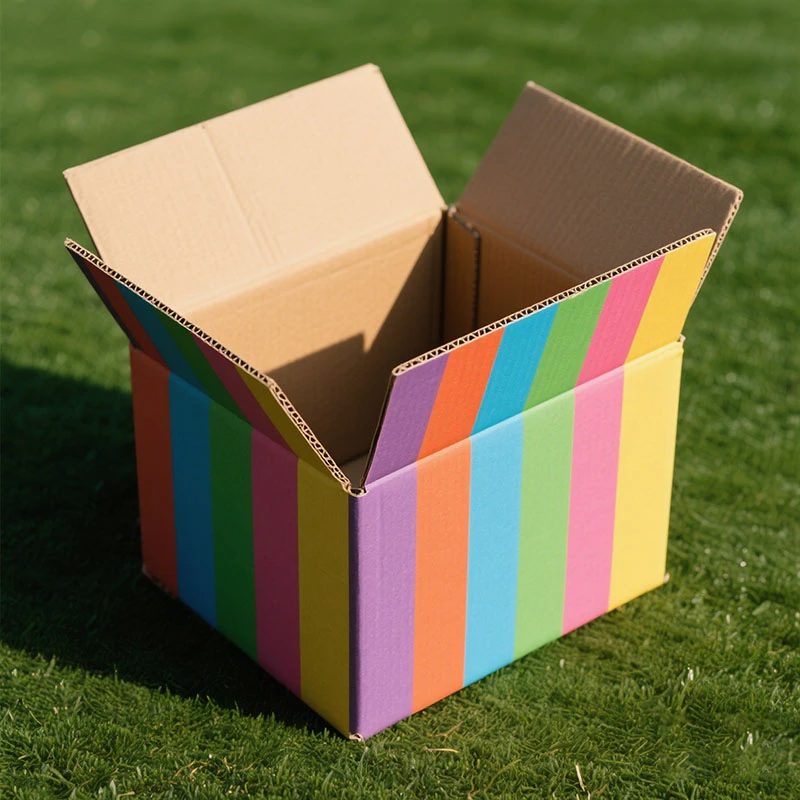
Through the above analysis, we can clearly answer the question "What is a duplex box?": It is a high-performance packaging box made of duplex board, which integrates excellent printing adaptability and structural stability. The combination of various printing technologies (such as offset printing, flexographic printing, UV curing printing, digital printing) gives duplex boxes diverse application possibilities, which can meet the packaging needs of different industries such as food, cosmetics, and gifts.
For users who need to customize duplex boxes, the key to achieving the best printing effect is to match the right printing technology according to the material of the duplex board, the complexity of the pattern, the production volume, and other factors, and pay attention to the key parameters of printing and post-processing. In the future, with the development of printing technology, duplex boxes will further realize the integration of "personalization, environmental protection, and high efficiency", bringing more value to the packaging industry. Whether you are an enterprise pursuing cost performance or an individual who needs personalized customization, duplex boxes are a packaging choice worthy of in-depth understanding and application.


