

Where to Get Free Corrugated Cardboard? A Practical Guide from Acquisition to Re-printing
Corrugated cardboard, prized for its lightweight, sturdy, and recyclable properties, is an ideal choice for packaging, crafts, temporary storage, and more. However, purchasing new corrugated cardboard can add to costs, especially for small businesses, crafters, or eco-conscious individuals. Finding free corrugated cardboard not only saves money but also embodies sustainable practices. Yet, free corrugated cardboard often bears original printing marks. These prints not only convey information but also impact reuse effectiveness. This guide comprehensively lists sourcing channels for free corrugated cardboard, analyzes its printing characteristics, and provides practical reprocessing techniques-empowering you to find treasures and maximize their value.
I. Prime Sources of Free Corrugated Cardboard: A Scenario-Based Guide
Free corrugated cardboard isn't randomly available but clusters in specific settings. Understanding these channels' patterns boosts both efficiency and quality.
1. Retail and Food Service: Daily Consumption Hotspots
Supermarkets and Convenience Stores: Food and daily goods arrive in corrugated boxes, which are processed in bulk after closing. Contact store managers in the evening, explain your purpose (e.g., moving, crafts), and you'll often get them for free. These corrugated boards are typically B-flute or C-flute, featuring printed product logos and ingredient lists using flexographic printing. The ink is relatively easy to remove.
Restaurants and Coffee Shops: Delivery boxes for beverages and ingredients (e.g., milk crates, coffee bean boxes) are often made of E-flute fine corrugated cardboard. Their smooth surface makes them suitable for small-scale crafts. Printing mainly features brand names and simple graphics using water-based inks, which are eco-friendly and easy to process.
Home improvement stores: Packaging for furniture and lighting fixtures is often made of heavy-duty A-flute corrugated cardboard, offering strong load-bearing capacity and suitable for large storage needs. Printing typically consists of monochrome text (e.g., "Fragile," "This Side Up") with some product illustrations, using durable inks to withstand long-distance transport.
2. Logistics & Courier Hubs: Collection Points for Packaging Waste
Courier Stations & Outlets: Generate vast quantities of opened corrugated boxes daily, especially during major e-commerce sales events (e.g., Black Friday, Singles' Day). These boxes feature diverse printing including tracking numbers, destination details, and e-commerce platform logos, mostly via digital or flexographic printing, with some incorporating QR codes.
Logistics Companies (e.g., UPS, FedEx): Some locations offer free damaged or surplus corrugated cardboard (non-standard boxes), suitable for cutting and reuse. Printing typically uses corporate standard colors (e.g., UPS brown) with spot color printing, resulting in high color saturation.
3. Community and Business: Mutual Aid Networks for Recycling
Community Recycling Stations and Sharing Groups: Many neighborhoods feature free resource corners where residents donate unused corrugated cardboard. Local mutual aid groups on social platforms (e.g., Facebook Groups, Nextdoor) often have households or businesses giving away packaging materials for free. This cardboard carries diverse printing, ranging from advertising graphics to private addresses.
Factory and Business Warehouses: Raw material packaging from manufacturers (e.g., cartons for electronic components or fabric rolls) is typically custom-made in bulk with consistent quality. Contact corporate administrative departments to obtain discarded corrugated cardboard. Its printing often features brand logos and batch information, frequently using offset printing for finer, more detailed patterns.
II. Decoding Free Corrugated Cardboard: Understanding the Information Behind the Marks
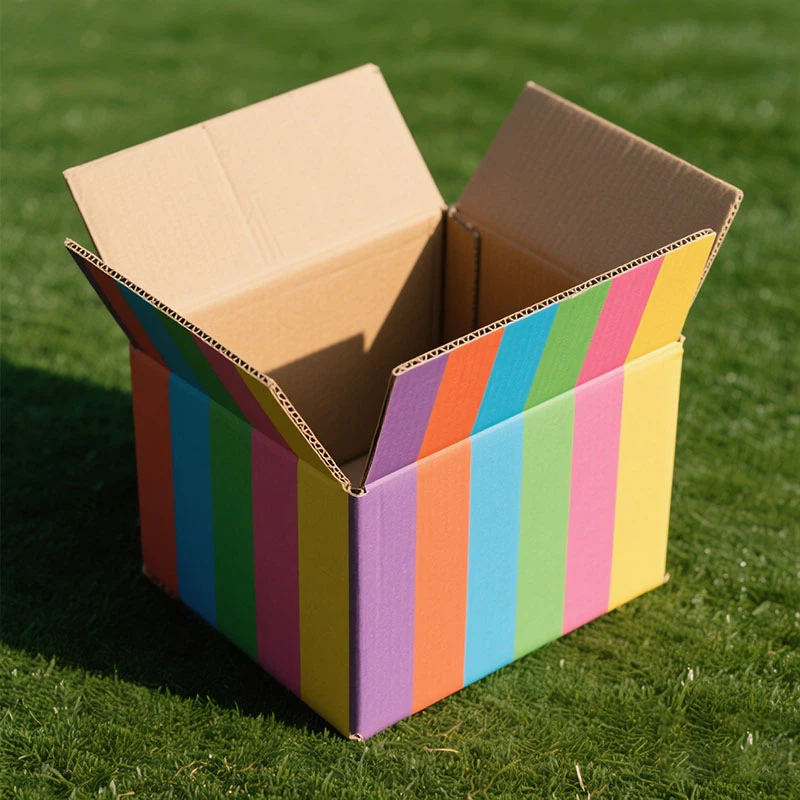
Printing on free corrugated cardboard isn't meaningless-it reveals clues about its original purpose and material properties. Understanding these prints helps assess its potential for reuse.
1. Printed Content: Determining Material and Suitable Applications
Brand and Product Information: Corrugated cardboard bearing well-known brand logos typically comes from reputable companies, indicating more reliable material (e.g., uniform thickness, strong bonding). For example, Apple product packaging uses high-strength corrugated cardboard with a matte black logo, suitable for repurposing into storage boxes.
Warning Labels: Corrugated cardboard marked "Fragile" or "Heavy Duty" indicates load-bearing capacity. "Heavy Duty" typically corresponds to 5-layer corrugated cardboard, suitable for weight-bearing applications; "Fragile"-labeled corrugated cardboard may be thinner but features a smoother surface, making it suitable for printing.
Eco-labels: Markings like "100% Recycled" or "FSC Certified" indicate environmental credentials. Recycled corrugated cardboard surfaces may be rougher, requiring higher ink adhesion for secondary printing.
2. Printing Technology: Key Factor Affecting Reusability
Flexographic printing marks: Slightly blurred edges with moderate color saturation (common on supermarket food boxes). Inks are typically water-based and easily wiped off with alcohol or warm water, suitable for scenarios requiring reprinting.
Offset printing marks: Features fine patterns and rich color gradations (common on cosmetics and electronics packaging). Ink adheres firmly and requires stronger solvents (e.g., citric acid solution) for removal, but the surface remains relatively smooth afterward, making it suitable for high-precision secondary printing.
Digital printing marks: Often found on small-batch custom designs (e.g., personalized ads on e-commerce shipping boxes). The ink dries quickly but has weak adhesion. Wiping with a dry cloth can remove some traces, making it suitable for manual decoration.
3. Printing Defects: Identifying Potential Issues
Free corrugated cardboard may exhibit issues like ink smearing or misregistration, potentially caused by equipment malfunctions or material flaws during original printing. Minor smearing doesn't affect structural integrity, but large ink buildup may cause localized moisture absorption, requiring inspection for mold risks.
III. Reuse Techniques for Printed Surfaces: Transforming Old Marks into New Value
After acquiring free corrugated cardboard, treating original printing marks is crucial for reuse. Select appropriate methods based on print type to preserve board integrity while preparing surfaces for new printing or decoration.
1. Light Treatment: Suitable for scenarios requiring original texture retention
Dry Wiping Method: Use a slightly damp cloth or Magic Eraser to wipe off water-based ink marks from flexographic printing. Moderate pressure can remove over 70% of the pattern, ideal for simple masking during handmade crafts.
Spot Masking: Cover sensitive information (e.g., addresses, phone numbers) with kraft paper tape or adhesive printing stickers. Opt for monochrome stickers matching the cardboard's color to avoid visual disruption.
Sketch Overlay: Use eco-friendly water-based markers to doodle over printed areas. This technique conceals marks while adding creativity, ideal for children's crafts or art installations.
2. Deep Processing: Preparing for Reprinting
Solvent Cleaning: For stubborn traces from offset or UV printing, mix citric acid and water at a 1:5 ratio. Dip a sponge into the solution and gently wipe the area. After 10 minutes, rinse with clean water. Once dried, the cardboard surface will have a near-neutral pH, ensuring optimal ink adhesion.
Sandpaper Abrasion: For rough recycled corrugated surfaces, lightly sand printed areas with 400-grit fine sandpaper. This removes ink residue while smoothing the surface, enhancing color uniformity for subsequent printing.
Primer Treatment: For high-precision reprinting, apply a water-based primer coat first. This fills microscopic pores on the cardboard surface, enhances new ink adhesion, and produces sharper printed patterns.
3. Secondary Printing Solutions: Select Technology Based on Application
Manual Screen Printing: Suitable for small-batch customization (e.g., event signage). Using simple screens and water-based inks, text or basic patterns can be printed on treated corrugated cardboard at low cost (including screens and ink).
Inkjet Printing: Cut corrugated cardboard into A4 or A3 sheets and feed directly into an inkjet printer supporting thick paper. Select matte ink to prevent glare, suitable for labels or decorative prints.
Stamping and Rubbing: Dip a rubber stamp in eco-friendly ink and repeatedly rub it onto cardboard to create repeating patterns. Ideal for gift wrapping or making storage boxes, this method is simple and extremely low-cost.
IV. Practical Applications and Printing Solutions for Free Corrugated Cardboard
Different scenarios demand varying performance and printing requirements from corrugated cardboard. Selecting solutions tailored to the characteristics of free cardboard maximizes its value.
1. Packaging & Logistics: Emphasize Functional Printing
Temporary Storage Boxes: Repurpose supermarket food crates by retaining their original corrugated structure. Handwrite storage categories (e.g., winter clothing) on sides using markers-no complex processing required.
E-commerce Shipping Packaging: Remove original shipping labels from boxes, then print new logistics labels using a digital printer. Opt for synthetic paper labels-waterproof and tear-resistant-for secure adhesion to corrugated surfaces.
Moving Boxes: Reinforce discarded heavy-duty corrugated cardboard with tape. Apply highlighter markings on sides for room identifiers (e.g., bedroom, kitchen) for high visibility and easy recognition.
2. Handcrafting & Decoration: Focus on Creative Printing
Children's Playhouse: Construct a small house from shipping corrugated cardboard. Print cartoon patterns on the surface using finger paints-safe, non-toxic, and vibrantly colored, perfect for parent-child activities.
Home Storage Boxes: Fold E-flute corrugated cardboard into drawer boxes. Apply foil stamping (or substitute with gold foil tape for a home-friendly version) to print patterns on the surface, enhancing texture. Cost: only $2-3 per unit.
Holiday Decorations: For Christmas or Halloween, craft free-hanging ornaments from corrugated cardboard. Employ cut-out printing (hand-carving as an alternative) to create light and shadow effects for indoor display.
3. Commercial & Public Service: Balancing Branding and Sustainability
Small Exhibition Backdrops: Assemble multiple large corrugated cardboard sheets into a backdrop wall. Apply large-scale screen printing (outsource to small print shops) with brand logos and event themes, costing only one-third of traditional display boards.
Public Service Announcement Signs: Communities or social organizations can utilize free corrugated cardboard to create environmental awareness signs. Printed with UV-resistant ink (e.g., "Reduce, Reuse, Recycle"), these signs withstand weather exposure and are suitable for outdoor placement.
V. Considerations for Acquiring Free Corrugated Cardboard: Legal, Safety, and Efficiency
Free does not mean rule-free. Pay attention to the following issues during acquisition and use to avoid disputes or losses.
1. Legality: Respect Ownership and Privacy
Do not take discarded corrugated cardboard from businesses or enterprises without permission. Some merchants sell their boxes to recyclers collectively; unauthorized removal may constitute infringement.
When handling delivery boxes, thoroughly remove personal information (name, phone number, address) from shipping labels. First, black out details with a marker, then shred the box or soak it in water to smudge the ink, preventing data leaks.
2. Safety: Inspect Structure and Sanitation
Refuse corrugated cardboard contaminated with grease or chemicals. Such substances may corrode the cardboard, and residual harmful materials could compromise reuse (especially in food contact scenarios).
Check for crushing or fractures. For weight-bearing applications, select cardboard without significant structural damage to prevent collapse during use.
3. Efficiency: Establish Stable Channels
Build long-term relationships with frequented supermarkets and coffee shops, arranging fixed pickup times (e.g., after closing on Mondays) to secure consistent supply while reducing merchants' disposal burdens.
Join local "free resource exchange" communities to promptly access corrugated cardboard listings and share processing expertise, fostering mutual support networks.
VI. Case References: Examples of Upcycling Free Corrugated Cardboard
1. Packaging Upgrade for Small Farms
An organic farm repurposed fruit corrugated boxes from supermarket recycling. After removing original printing, they hand-screen-printed the farm logo and organic certification mark. This reduced packaging costs from $2 per new box to $0.50 (covering only ink and labor), saving over $3,000 in six months.
2. Community Art Installation
A group of artists collected 100 shipping corrugated boxes. After removing printing residue with citric acid solution, they printed fluorescent ink portraits of community residents onto the surfaces. These were assembled into a large-scale installation art piece, later disassembled and recycled post-exhibition, achieving zero waste.
3. Home Storage System
A homemaker crafted drawer dividers from free corrugated cardboard of varying sizes. She labeled categories (e.g., socks, ties) using color-printed adhesive stickers. Employing die-cutting techniques (hand-cut instead of machine-cut) ensured clean edges. The total cost was under $10, yet wardrobe organization efficiency improved by 50%.

Conclusion
Free corrugated cardboard is accessible throughout daily life-from retail stores to logistics hubs, community exchanges to corporate surplus. Mastering sourcing patterns ensures a steady supply of high-quality material. Original printing marks aren't a liability; understanding their technical characteristics and processing techniques guides reuse. Whether simply covered for storage or deeply treated for reprinting, these discarded materials gain new value.
For users, the key lies in aligning with personal needs: Businesses focused on cost and brand visibility may prioritize professional reprinting; crafters seeking creativity can freely apply graffiti or handmade decorations; while eco-conscious individuals can minimize processing to practice sustainability. The value of free corrugated cardboard extends beyond its "free" status-it teaches us that with ingenuity and hands-on effort, ordinary materials can embody both utility and beauty.
Next time you pass by a supermarket's waste pile or a delivery hub, take a closer look at those corrugated cardboard boxes bearing faint traces of printing. They might just be the starting point for your next creative project.


