


As a provider of custom birthday card printing services, I've witnessed firsthand how different printing techniques can significantly transform the final look of these personalized tokens of celebration. Each method brings its own set of characteristics, advantages, and aesthetic possibilities to the table, making the choice of printing technique a crucial decision in creating a truly memorable birthday card.
Offset Printing: The Classic Choice for Quality and Consistency
Offset printing is one of the most traditional and widely used printing techniques in the industry. It involves transferring ink from a plate to a rubber blanket and then onto the printing surface. This indirect method allows for precise color reproduction and sharp image quality, making it an excellent choice for birthday cards with detailed designs, rich colors, and high-resolution photographs.
One of the key advantages of offset printing is its ability to produce large quantities of cards with consistent quality. The plates used in offset printing can be reused multiple times, ensuring that each card in a batch looks identical. This makes offset printing ideal for bulk orders, such as corporate birthday card campaigns or large family gatherings.
Another benefit of offset printing is its versatility. It can be used on a variety of paper stocks, including coated and uncoated papers, as well as specialty materials like metallic or textured papers. This allows for endless possibilities in terms of card design and finish, from sleek and sophisticated to rustic and handmade.
However, offset printing does have some limitations. It requires a significant upfront investment in plate making, which can make it less cost-effective for small print runs. Additionally, the setup time for offset printing can be longer than other printing methods, which may not be suitable for urgent orders.
Digital Printing: The Flexible Option for Short Runs and Personalization
Digital printing has revolutionized the printing industry in recent years, offering a more flexible and cost-effective alternative to traditional offset printing. Unlike offset printing, which uses plates to transfer ink onto the printing surface, digital printing applies ink directly to the paper using a digital file. This eliminates the need for plate making, making it ideal for short print runs and personalized projects.
One of the biggest advantages of digital printing is its ability to produce high-quality prints with variable data. This means that each card in a print run can be customized with unique text, images, or graphics, making it perfect for personalized birthday cards. Digital printing also allows for quick turnaround times, as there is no need to wait for plate making or setup.
Another benefit of digital printing is its eco-friendliness. It uses less ink and paper than offset printing, and there is no need for chemical processing of plates. This makes it a more sustainable option for environmentally conscious customers.
However, digital printing does have some limitations. It may not be suitable for large print runs, as the cost per unit can be higher than offset printing. Additionally, the color accuracy and image quality of digital prints may not be as consistent as offset prints, especially when printing on certain paper stocks or with complex designs.
Screen Printing: The Artistic Choice for Bold and Textured Designs
Screen printing is a traditional printing technique that has been used for centuries to create bold and vibrant designs on a variety of surfaces, including paper, fabric, and wood. It involves pushing ink through a mesh screen onto the printing surface, creating a raised and textured effect. This makes screen printing an excellent choice for birthday cards with bold colors, large graphics, or unique textures.
One of the key advantages of screen printing is its ability to produce high-impact designs with a lot of visual interest. The raised ink creates a tactile and three-dimensional effect that can make a birthday card stand out from the crowd. Screen printing also allows for the use of specialty inks, such as metallic, fluorescent, or glitter inks, which can add an extra touch of sparkle and glamour to the card.
Another benefit of screen printing is its durability. The ink used in screen printing is typically thicker and more opaque than other printing methods, which means that the design will last longer and resist fading or smudging. This makes screen printing ideal for cards that will be displayed or kept as a keepsake.
However, screen printing does have some limitations. It is a more labor-intensive and time-consuming process than other printing methods, which can make it more expensive. Additionally, screen printing is not suitable for detailed or high-resolution designs, as the mesh screen can limit the level of detail that can be achieved.
Foil Stamping: The Luxurious Choice for Adding a Touch of Glamour
Foil stamping is a decorative printing technique that involves applying a thin layer of metallic or colored foil to the surface of a card using heat and pressure. This creates a shiny and reflective effect that can add a touch of luxury and sophistication to a birthday card. Foil stamping can be used on a variety of paper stocks, including coated and uncoated papers, as well as specialty materials like metallic or textured papers.

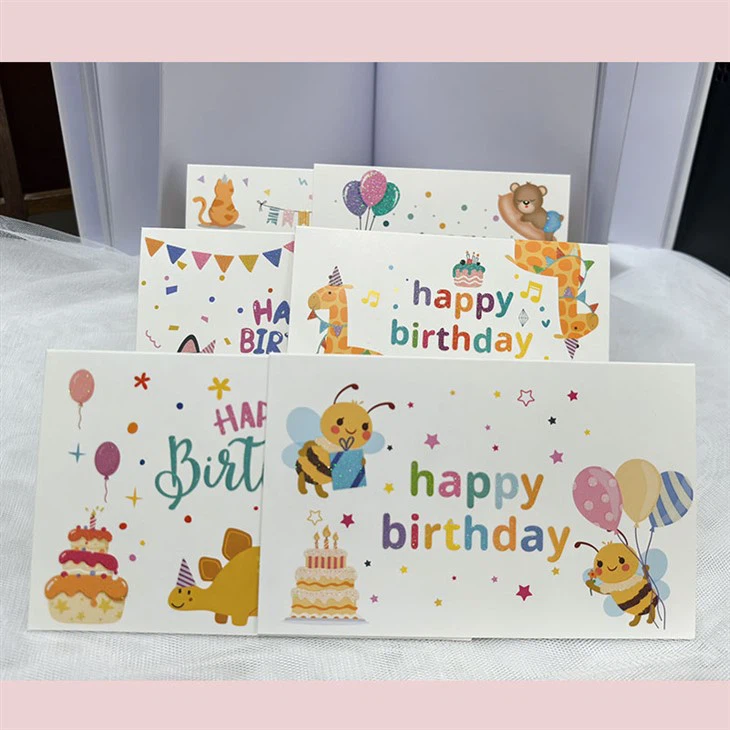
One of the key advantages of foil stamping is its ability to create a high-impact design with a lot of visual interest. The shiny and reflective foil adds a touch of glamour and elegance to the card, making it perfect for formal or upscale occasions. Foil stamping also allows for the use of a variety of colors and finishes, including gold, silver, copper, and holographic foils, which can add an extra touch of sparkle and shine to the card.
Another benefit of foil stamping is its durability. The foil used in foil stamping is typically very thin and flexible, which means that it will not crack or peel over time. This makes foil stamping ideal for cards that will be displayed or kept as a keepsake.
However, foil stamping does have some limitations. It is a more expensive printing technique than other methods, as it requires specialized equipment and materials. Additionally, foil stamping is not suitable for large print runs, as the setup time and cost can be prohibitive.
Embossing and Debossing: The Tactile Choice for Adding Dimension and Texture
Embossing and debossing are two decorative printing techniques that involve creating a raised or recessed design on the surface of a card using a die and pressure. Embossing creates a raised design, while debossing creates a recessed design. These techniques can add a tactile and three-dimensional effect to a birthday card, making it more interesting and memorable.
One of the key advantages of embossing and debossing is their ability to create a high-impact design with a lot of visual interest. The raised or recessed design adds a tactile and three-dimensional effect that can make a birthday card stand out from the crowd. Embossing and debossing also allow for the use of a variety of paper stocks, including coated and uncoated papers, as well as specialty materials like metallic or textured papers.
Another benefit of embossing and debossing is their durability. The raised or recessed design is permanent and will not fade or wear over time. This makes embossing and debossing ideal for cards that will be displayed or kept as a keepsake.
However, embossing and debossing do have some limitations. They are more expensive printing techniques than other methods, as they require specialized equipment and dies. Additionally, embossing and debossing are not suitable for detailed or high-resolution designs, as the die can limit the level of detail that can be achieved.
Conclusion
In conclusion, the choice of printing technique can have a significant impact on the final look of custom birthday cards. Each method brings its own set of characteristics, advantages, and aesthetic possibilities to the table, making it important to choose the right technique based on your specific needs and budget.
Offset printing is the classic choice for quality and consistency, making it ideal for large print runs and detailed designs. Digital printing is the flexible option for short runs and personalization, offering quick turnaround times and variable data printing. Screen printing is the artistic choice for bold and textured designs, while foil stamping is the luxurious choice for adding a touch of glamour. Embossing and debossing are the tactile choice for adding dimension and texture.
As a provider of custom birthday card printing services, we offer a wide range of printing techniques to meet the needs of our customers. Whether you're looking for a classic and elegant design or a bold and modern statement, we can help you create the perfect birthday card that will make your loved ones feel special.
If you're interested in learning more about our custom birthday card printing services, or if you have any questions or concerns, please don't hesitate to [contact us for a free consultation]. We look forward to working with you to create a truly memorable birthday card.
References
- "Printing Techniques: A Comprehensive Guide." Printing Industries of America.
- "The Complete Guide to Custom Card Printing." CardPrinting.com.
- "Choosing the Right Printing Method for Your Project." PrintRunner.


