


Xingwei at a Glance: Key Facts About Our Shenzhen Factory
Here are the core facts most buyers want before reading further:
- Founded: 1995 - more than 30 years in printing and packaging.
- Location: Longgang District, Shenzhen, China.
- Scale: 100+ employees and a 7,500 m² facility with complete in-house production lines.
- Core products: hardcover and paperback books, rigid and folding boxes, corrugated shipping cartons, paper bags, notebooks, cards, labels, and inserts.
- Compliance: FSC, ISO 9001 and ISO 14001, BSCI, Sedex (SMETA), SGS testing, and G7 color management.
- Minimum order: low and flexible - set by product and finish rather than one fixed number.
- Service model: one-stop OEM and ODM, from structural design to shipping.
- Shipping: export-focused, delivering to brands across multiple continents.
Three Decades of Focused Printing and Packaging Experience
Plenty of suppliers can hand you a catalog of thirty product lines; we would rather point to thirty years inside one. Xingwei was founded in 1995 and has run continuously since, which means our team has worked through currency swings, paper shortages, and shifting export rules without dropping the customers who depend on us. That track record is the practical reason a publisher trusts us with a school-year print run, or a brand trusts us with a launch. If you want the detail behind the claim, you can read more about our company background.
One-Stop OEM and ODM: What a Single Partner Saves You
Send us a brief and you work with one team from first sketch to final pallet, instead of coordinating a separate designer, printer, finisher, and freight contact who each blame the others when a date slips. Our OEM and ODM service covers structure design, material selection, sample making, printing, surface finishing, bulk production, and delivery under one roof. If you arrive with finished artwork, we pressure-test the dielines, bleed, and resolution before anything reaches a press; if you arrive with only an idea, our structural team builds a dieline from your product's real dimensions. The same coordination applies to custom box packaging, where one point of contact usually means fewer revisions and a single invoice instead of five.
Certifications That Clear Customs and Pass Retail Audits
Picture your container parked at a port, or a major retailer's compliance officer running a supplier audit the week before your order clears. That is when certifications stop being footer logos and start deciding whether goods ship or sit. We supply paper and board certified by the Forest Stewardship Council (FSC), so you can make a defensible claim about where your fiber comes from. Our processes follow ISO 9001 quality and ISO 14001 environmental management, which means control is documented rather than improvised. We have passed BSCI and Sedex (SMETA) social-compliance audits - exactly what large Western buyers ask for before adding a Chinese factory to an approved-vendor list - and we back material safety with SGS testing. None of it is glamorous, but it is the paperwork that keeps a shipment moving. You can see how we apply it day to day in our quality management program.
How We Protect Print Quality: Color, Structure, and Dielines
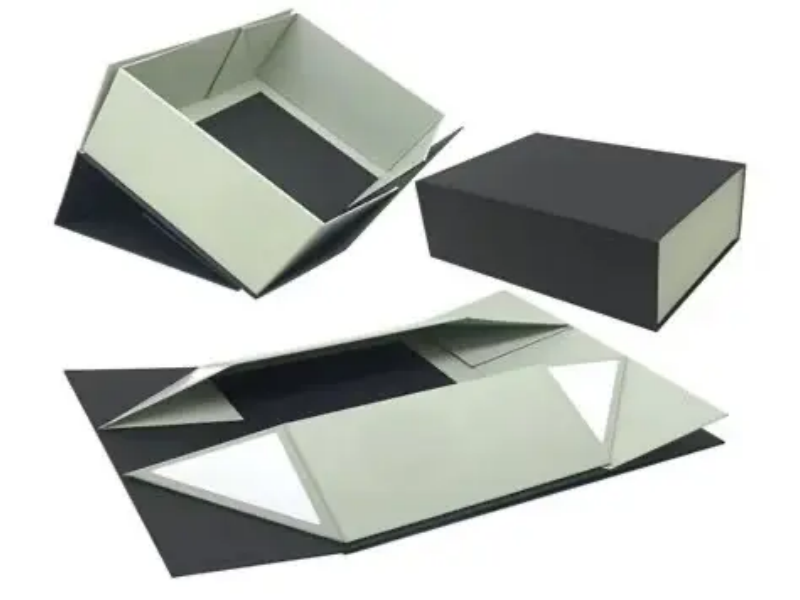
Print quality is decided long before a press starts, in a stack of small choices buyers rarely see. Color is the obvious one. We use G7 color calibration, a method that controls neutral gray balance so tones stay consistent across runs - the practical reason a reorder six months out should still match today's box. Our team's notes on color management in book printing show how seriously the prepress side is taken. Structure is the quieter battle: a rigid lid that looks perfect on a sample can crush in a stacked pallet, which is why reinforcing a box lid gets engineered rather than guessed at. The same discipline applies to flat work, where the dieline behind a folding carton decides whether a box snaps together on a packing line or fights every assembler.
Books, Boxes, and Almost Everything Between
Our range is unusually broad for one factory, which is part of why publishers and product brands both end up here. The core capabilities fall into a few groups:
- Books: hardcover and paperback, children's and board books, textbooks, catalogs, and manuals through our book printing lines.
- Rigid and gift packaging: premium rigid boxes and space-saving collapsible rigid boxes that ship flat to cut freight.
- Shipping and retail cartons: folding cartons and corrugated shipping boxes for cosmetics, electronics, food, and wine.
- Paper goods and finishing: notebooks, cards, paper bags, labels, inserts, plus foil, embossing, spot UV, and lamination.
The advantage is simple. A brand shipping a boxed gift set with a printed booklet inside can source the book, the box, the insert, and the outer carton from one place, under one color standard - instead of chasing four vendors and hoping their reds agree.
What Drives Your Cost - and How We Help Keep It Down
Most "why choose us" pages dodge price, so here is the honest mechanism. Five factors move a printing or packaging quote more than anything else:
- Quantity and print method: short runs favor digital, while larger runs make offset cheaper per unit. The crossover is where the offset versus digital choice pays off.
- Material and board: heavier greyboard, specialty stocks, and rigid construction cost more than standard folding-carton board.
- Finishing: foil, embossing, spot UV, and lamination each add a pass and a price.
- Structure: complex dielines, inserts, and magnets raise tooling and assembly time.
- Shipping: volume and weight drive freight, which is why flat-shipping structures matter.
We quote these line by line and suggest trade-offs - substituting a finish, adjusting board weight, or right-sizing a box - so the savings are visible rather than buried. Our guide to controlling packaging printing costs walks through the same logic.

From Quote to Delivery: How a Project Runs
A first project follows a predictable rhythm, and knowing it removes most of the worry. It starts with a quote: you share the book spec or box type, dimensions, material, quantity, and finish, and we return clear pricing and a lead time. Next comes artwork review, where we check dielines, bleed, and print settings so problems surface on screen, not on a thousand copies. Once specs and price are locked, a deposit reserves materials and a production slot. Then you sign off on a physical sample or digital proof - the stage where changes are cheap. After approval, full production runs with in-line quality checks; once the balance is paid, we pack securely and ship on your terms with tracking where available. When you are ready, you can request a quote with your specifications.
Xingwei vs. Other Ways to Source Printing and Packaging
To be useful rather than promotional, here is how we compare with the common alternatives:
- A focused China factory (like us): strong on customization, audited compliance, and coordinated book-plus-packaging orders at low MOQ; the trade-off is sea-freight lead time versus a same-week local job.
- Marketplace or listicle suppliers: easy to find and sometimes cheaper per unit, but quality, compliance paperwork, and accountability vary widely between the names on any "top 10" list.
- A local US or EU printer: fastest turnaround and easiest communication, but usually higher unit cost and a narrower range of finishes and structures.
If audited quality, broad customization, and a single accountable partner matter more to you than the rock-bottom price or a same-week deadline, a focused factory is the stronger fit.
Is Xingwei the Right Fit for You?
Honesty is part of the pitch. We fit you well if you are a global brand, publisher, school, or growing startup that wants real customization, audited compliance, and a low minimum order rather than a warehouse-clearing volume. We are a strong match when you value one accountable partner over the cheapest unit price, and when books and packaging need to be coordinated together. We are probably not the right call if you need a same-week domestic run with no tooling time, if your order is a one-off of a few units, or if you want to skip samples and approvals entirely. If the fit looks right, tell us about your project and ask about the current new-customer discount on a first order; the sample stage will tell you more than any page can.
Frequently Asked Questions
Where is Xingwei located, and how long has it been in business?
We are based in Longgang District, Shenzhen, China, and have manufactured since 1995 - more than thirty years. The factory covers 7,500 m² with over 100 employees and complete in-house production lines.
What is the minimum order quantity (MOQ)?
Our MOQ is deliberately low and flexible, which keeps us accessible to startups and brands testing a product. Exact minimums depend on the product and finish, so the practical step is to send your spec and quantity for a firm quote.
How long does production take?
Lead time depends on quantity, finishing, and proofing rounds. As a rough guide, simple jobs move faster while complex rigid boxes or large book runs take longer; we confirm a specific timeline with every quote and add a sample-approval checkpoint before the full run.
How much will my project cost?
Cost is driven by quantity, print method, material, finishing, structure, and shipping. We quote line by line and suggest trade-offs, so you can see exactly where the money goes and where it can be saved.
Can you match my brand colors across reorders?
Yes - color consistency is handled through G7 calibration plus prepress checks and a proof before mass production, which gives a reorder a strong chance of matching your original print months later.
Can you produce books and packaging in the same order?
Yes. Because books, rigid and folding boxes, inserts, and finishing all sit in one factory, a single project - say, a gift set with a booklet, an insert, and an outer carton - runs under one color standard and one point of contact.


